


Chicken with mustard sauce is what happens when a weeknight dinner actually lives up to the hype. The skin comes out golden and crispy, the meat stays juicy, and the pan sauce is tangy, rich, and just a little fancy. All you need is one cast-iron skillet, a handful of pantry ingredients, and about 30 minutes.

Jump to:
I make chicken thighs at least twice a week because they're the most forgiving cut of protein. They're hard to overcook, full of flavor, and go with just about anything. This recipe became a regular in my kitchen after I started experimenting with pan sauces, and the Dijon version stuck. The sauce comes together right in the same skillet, picking up all those golden brown bits from searing the chicken, which is where most of the flavor lives.
If you love bold, tangy flavors like this, my Honey Mustard Grilled Chicken hits the same notes with a smoky, charred finish that's great when the weather warms up.
Ingredients and Substitutions

- Bone-in, skin-on chicken thighs. The bone keeps the meat juicy while it finishes cooking in the sauce, and the skin crisps up beautifully in the cast iron. Skin-on thighs are more forgiving than breasts, which makes them a great option if you're newer to pan-searing.
- Dijon mustard. Regular yellow mustard won't give you the same depth here. Dijon has a sharper, more complex flavor that holds up to the white wine and chicken broth. It also helps the sauce cling to the chicken.
- Fresh Thyme. Adds a fragrant and earthy flavor to the thighs.
- White wine. The wine adds acidity and body to the pan sauce. A Sauvignon Blanc or Pinot Grigio both work well.
See the recipe card below for the remaining ingredients and quantities.
Substitutions & Variations
- No white wine? Use 1 tablespoon of white wine vinegar, a small splash of apple cider vinegar, or a squeeze of lemon juice. The goal is a little acidity to balance the mustard and lift the sauce.
- Chicken breasts instead of thighs. You can use boneless, skinless chicken breasts, but the timing changes. Sear for about 4 minutes per side over medium-high heat and skip the cold pan method. The sauce may need less time to reduce since breasts cook faster and release less fat. Watch the internal temp closely since breasts can dry out quickly once they go past 165°F.
- Grainy or whole grain mustard. Swapping Dijon for whole grain mustard gives the sauce a slightly different texture and a more mild, less sharp flavor. It still works and tastes great.
- Dried thyme. Fresh is better here, but if dried is all you have, use about ½ teaspoon. Add it with the garlic and shallots instead of at the sauce stage, so it has time to bloom.
How to Make Chicken with Mustard Sauce
Cook the chicken
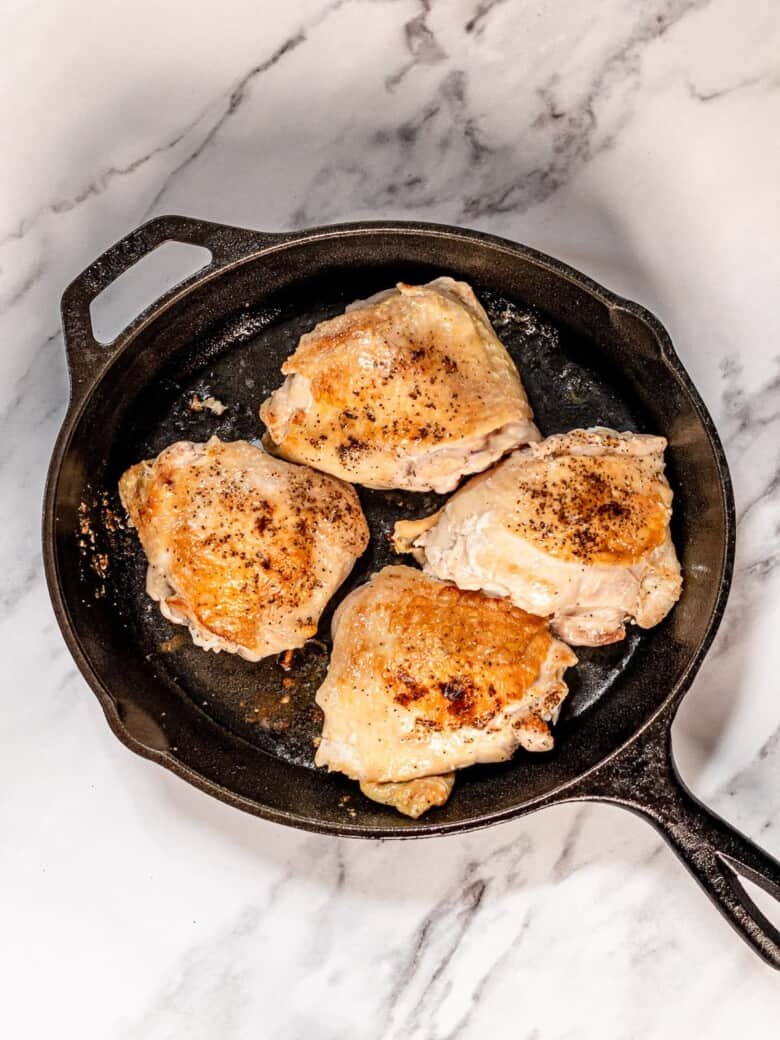
Season chicken with salt and pepper then place skin-side down in a COLD cast iron skillet. Set the heat to medium-high and cook until they easily lift and can be flipped without sticking, about 5-8 minutes. Cook on the other side for another 2-3 minutes. Set the chicken aside.

Start the sauce
Melt butter in the same skillet and add the garlic and shallot to sauté. Cook for 3 minutes or until soft and fragrant.

Reduce the sauce
Add the Dijon mustard, white wine (or vinegar), chicken broth, and fresh thyme sprigs. Stir to combine, scraping up any browned bits from the bottom of the pan. Let the sauce cook and reduce for about 5 minutes, until it thickens slightly.

Baste the chicken
Add the chicken back to the skillet skin side up and spoon the sauce over the top repeatedly for about 5 minutes, until the chicken is cooked through and a meat thermometer reads 165°F in the thickest part. Serve immediately.
Sarah's Top Tips
- Start the chicken in a cold pan. This is the one step that makes the biggest difference for crispy skin. Starting with cold cast iron and gradually increasing the heat allows the fat under the skin to render slowly, resulting in deeply golden skin without burning. If you drop chicken into a hot pan, the outside can scorch before the fat has time to render properly.
- Don't rush the sear. The chicken is ready to flip when it releases easily from the pan on its own. If you try to force it up and it sticks, it needs more time. A properly seared thigh will lift cleanly and have skin that's deep golden brown all the way across.
- Don't overcrowd the pan. Four bone-in thighs fit comfortably in a standard 12-inch cast iron. If you're doubling the recipe, cook the chicken in two batches. Crowding causes the chicken to steam instead of sear, and you'll lose the crust entirely.
Common Issues
Sauce too thin? Let it simmer a minute or two longer with the heat slightly higher. It will continue to reduce and thicken as the liquid evaporates. You can also whisk in a tablespoon of cold butter at the very end to help it emulsify and give the sauce a glossy, silky finish.
Sauce too sharp or acidic? Whisk in a tablespoon of butter or heavy cream and let it melt into the sauce off the heat. This rounds out the acidity from the wine and mustard without covering up the flavor.
Greasy sauce? This usually means too much fat from the chicken rendered into the pan before making the sauce. Tip the skillet slightly and spoon off some of the excess fat before adding the butter and shallots. Leave just enough to coat the bottom of the pan.

Serving Suggestions
This chicken with mustard sauce is one of those dinners that pairs well with just about anything starchy enough to soak up the extra sauce from the pan. I almost always serve it with Yukon Gold mashed potatoes because they're creamy, buttery, and catch every bit of that Dijon pan sauce.
For a lighter dinner, this also works really well alongside a simple Spinach and Arugula Salad or some roasted vegetables. If you're hosting and want to make the meal feel a little more elevated, serve it with crusty bread at the table so everyone can mop up the sauce.
Storage and Reheating
Fridge: Store leftover chicken and sauce together in an airtight container for up to 3-4 days. Keeping the chicken in the sauce helps it stay moist.
Stovetop (recommended): Reheat the chicken in the skillet over medium-low heat with the sauce spooned over the top. Cover loosely with a lid and heat for about 5-7 minutes, flipping once, until warmed through.
Oven: Place chicken in a baking dish, spoon sauce over the top, cover with foil, and reheat at 350°F for about 10-12 minutes.
Microwave: Works in a pinch. Place chicken in a microwave-safe dish with sauce, cover loosely, and heat in 60-second intervals until hot. The skin will soften, but the flavor stays intact.
Make-ahead: The sauce can be made 1-2 days ahead and reheated separately.
Did you make this recipe? Leave a ⭐️⭐️⭐️⭐️⭐️ rating and a comment below-I'd love to hear how it turned out! THANK YOU!

Pan-Seared Chicken with Mustard Sauce (One Pan, 30 Minutes)
Video
Save this Recipe!
See the full post for extra tips and photos
Ingredients
- 4 bone-in chicken thighs
- ½ teaspoon salt
- ½ teaspoon black pepper
- 1 tablespoon butter
- 1 shallot, diced
- 3 garlic cloves, minced
- 2 tablespoons mustard
- ¼ cup dry white wine or 1 tablespoon white wine vinegar
- ½ cup chicken broth
- 2 sprigs fresh thyme
Instructions
- Season the chicken thighs on both sides with salt and black pepper.4 bone-in chicken thighs, ½ teaspoon salt, ½ teaspoon black pepper
- Add the chicken thighs skin-side down to a COLD cast iron skillet. Set the heat to medium-high and cook until they easily lift and can be flipped (about 5-8 minutes). Cook on the other side for another 2-3 minutes.
- Remove the chicken from the pan once browned and set aside.
- Melt the butter in the skillet, add the shallots and garlic and cook until soft 3 minutes.1 tablespoon butter, 1 shallot, 3 garlic cloves
- Add in the mustard, white wine or white wine vinegar, chicken broth and thyme. Stir and cook until reduced, about 5 minutes.2 tablespoons mustard, ¼ cup dry white wine or 1 tablespoon white wine vinegar, ½ cup chicken broth, 2 sprigs fresh thyme
- Add the chicken back in and baste with the sauce for about 5 minutes until it is cooked through.
Sarah's Tips
- Chicken: Bone-in, skin-on thighs work best here. They stay juicy and are harder to overcook than breasts.
- Cold pan method: Start the chicken in a cold cast-iron skillet, not a hot one. This is what gives you crispy, golden skin.
- Don't force the flip: The chicken is ready to flip when it lifts easily on its own. If it sticks, give it another minute.
- Doneness: Chicken is done when a meat thermometer reads 165°F in the thickest part, away from the bone.
- No wine? Swap for 1 tablespoon white wine vinegar plus extra broth, or a small squeeze of lemon juice.
- Thin sauce? Let it simmer a little longer. For extra richness, whisk in 1 tablespoon cold butter at the end.
- Too acidic? Whisk in 1 tablespoon butter or a splash of cream off the heat to mellow it out.
Tools I Use for This Recipe
- Cutting board
John Robinson says
Great dish with amazing flavor. Easy to prepare as described. Also works great using chicken breast tenderloins.
Sarah Hill says
Hi John, really happy to hear you enjoyed the chicken! This is one of my favorite sauces.