


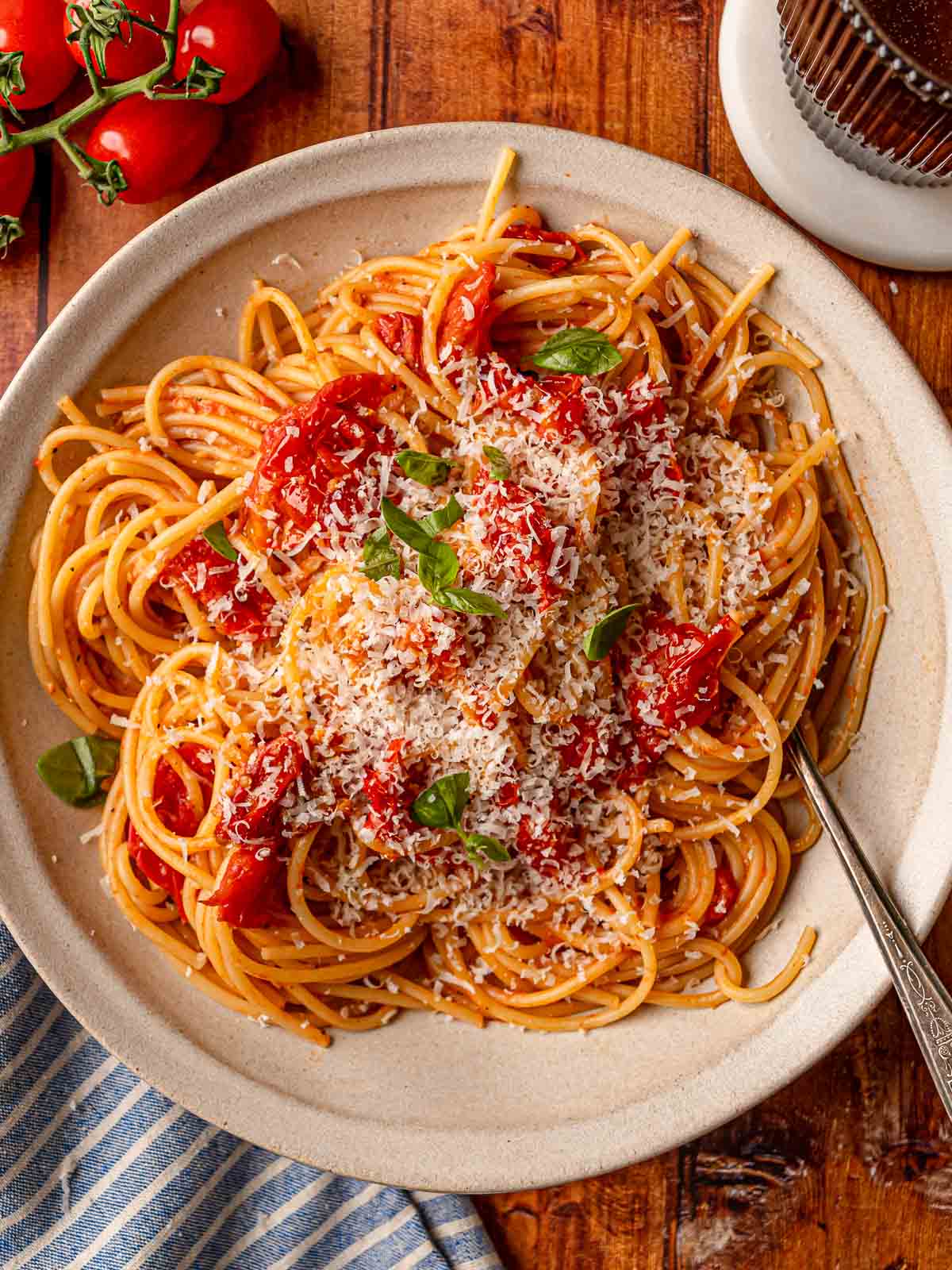
Two pints of cherry tomatoes, a handful of pantry staples, and 30 minutes. That's all it takes to make this fresh cherry tomato pasta sauce. The sauce turns out bright, jammy, and deeply savory, and it tastes nothing like the stuff from a jar. You'll toss it with your favorite pasta, finish with fresh basil and Parmesan, and end up with something that tastes like you spent far more effort than you actually did.
Jump to:
I adore a homemade tomato pasta sauce, and I'd typically make one with canned tomatoes. But when fresh cherry tomatoes are available (at the farmers market, in my garden, or just piled up in a pint on my counter), this stovetop method gives me something no can can match. As the cherry tomatoes cook over medium heat, their skins soften and split, releasing a flood of sweet, concentrated juice. That liquid becomes the sauce. I press them gently with the back of a spoon as they burst, which helps everything meld into a loose, rustic sauce that still has some texture and body. It's not a silky marinara. It's better. It's bright and just a little bit chunky, with a sweet-tart depth that tastes unmistakably fresh.
I've made this with red, yellow, and mixed cherry tomatoes, and all of them work beautifully. The red ones tend to give me the most savory, tomato-forward flavor. The yellow or mixed varieties can taste a little sweeter, which is a nice contrast to the red pepper flakes. Patience here matters more than technique. I keep the heat at medium, not high, and let the tomatoes do their thing. Rushing them on high heat causes the liquid to evaporate before the tomatoes fully break down, and the result is a drier, less cohesive sauce.
Key Ingredients
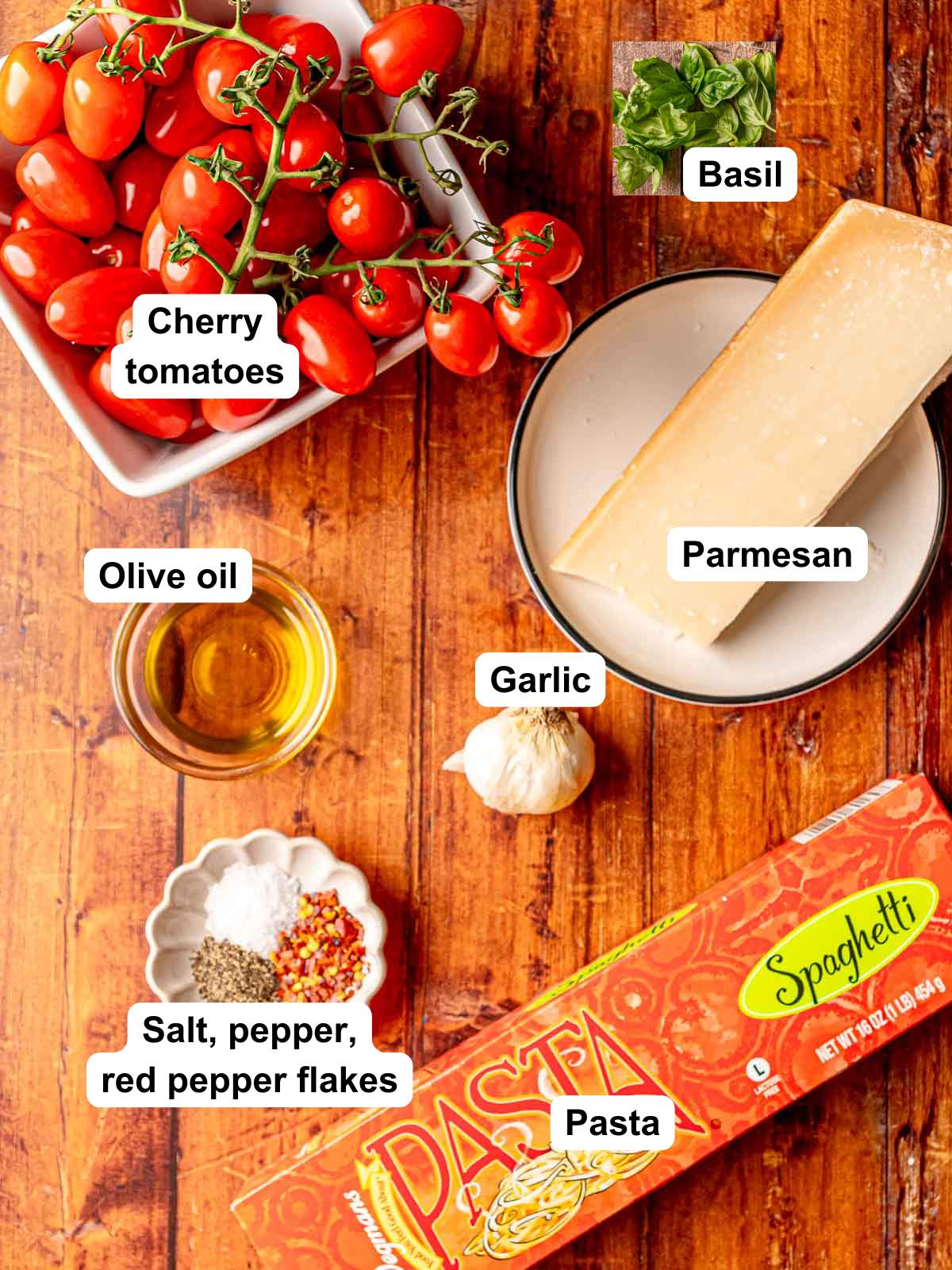
- Pasta. I used spaghetti, which works perfectly here because the sauce clings to each strand. Linguine or bucatini are great alternatives. Short pasta like rigatoni or penne also works if that's what you have.
- Olive oil. Use good-quality extra-virgin olive oil. It's one of only a handful of ingredients in this recipe, so it's worth it.
- Garlic. Fresh garlic is non-negotiable here. Pre-minced garlic from a jar won't give you the same punch or aroma. The garlic only cooks for 30 seconds before the tomatoes go in, so you want it fresh.
- Cherry tomatoes. Both red and mixed varieties work. I use grape and cherry tomatoes interchangeably here. Grape tomatoes tend to be a bit firmer and less sweet.
- Red pepper flakes. This gives the sauce a gentle background warmth, not spicy, just interesting. If you're heat-sensitive, start with ¼ teaspoon. If you love heat, go up to ¾ teaspoon.
- Fresh basil. Added off the heat so it stays bright and fragrant. Dried basil is not a good substitute here; the fresh basil is part of what makes this sauce taste vibrant.
- Parmesan cheese. Freshly grated Parmesan melts into the sauce and adds a salty, savory note. Pecorino Romano is a slightly sharper, saltier swap that works wonderfully.
See the recipe card below for the remaining ingredients and quantities.
How to Make Cherry Tomato Pasta Sauce
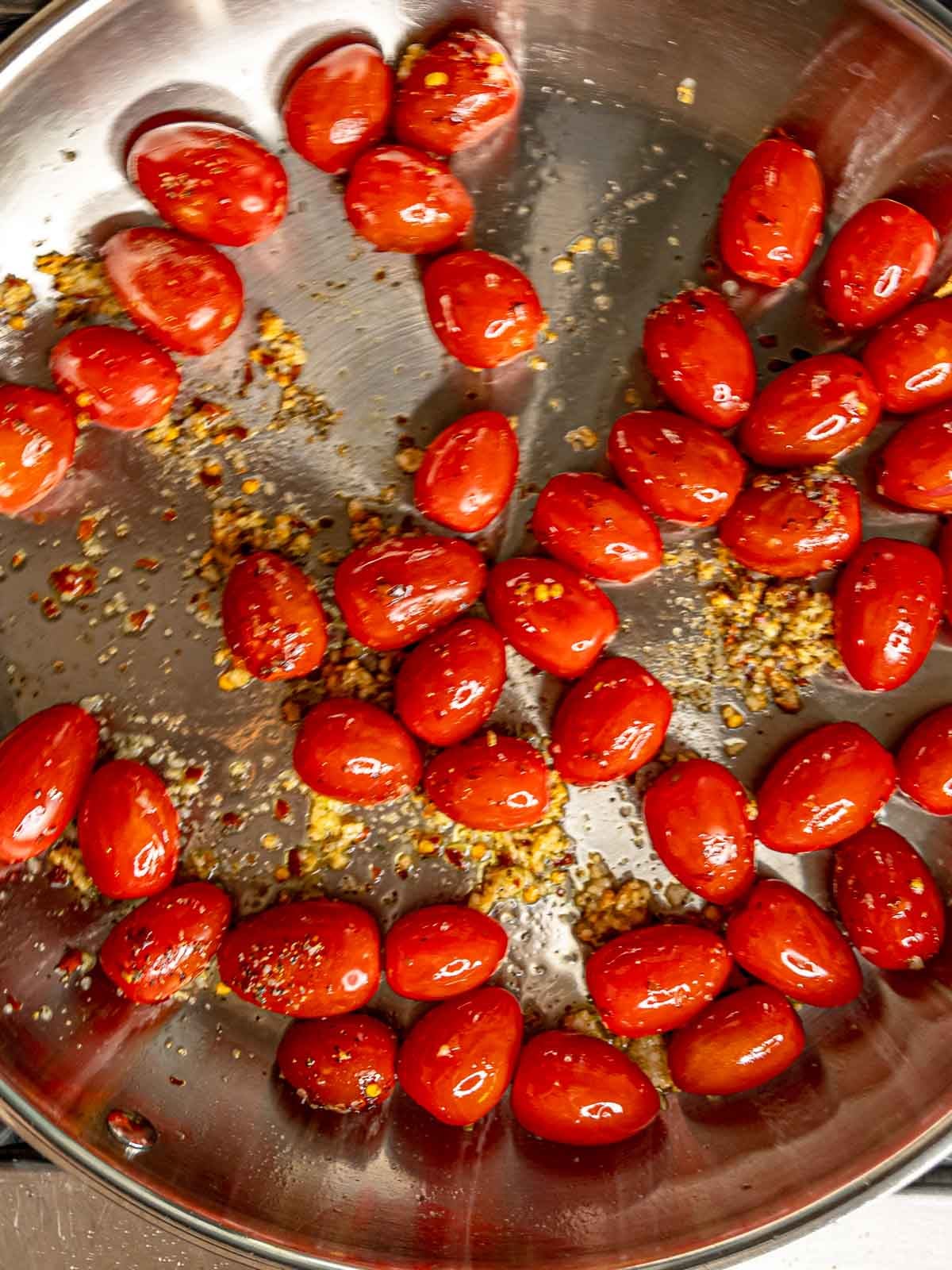
- Step 1: Bring a large pot of salted water to a boil. Cook the pasta according to package directions until al dente. Before you drain it, scoop out at least 1 cup of the pasta water and set it aside. This is your secret weapon for a silky sauce. While the pasta cooks, heat the olive oil in a large skillet over medium heat. Add the minced garlic and cook for about 30 seconds, stirring constantly. You're looking for it to smell deeply fragrant but not burnt or brown. This happens fast, so stay close. Add the cherry tomatoes, red pepper flakes, salt, and black pepper.
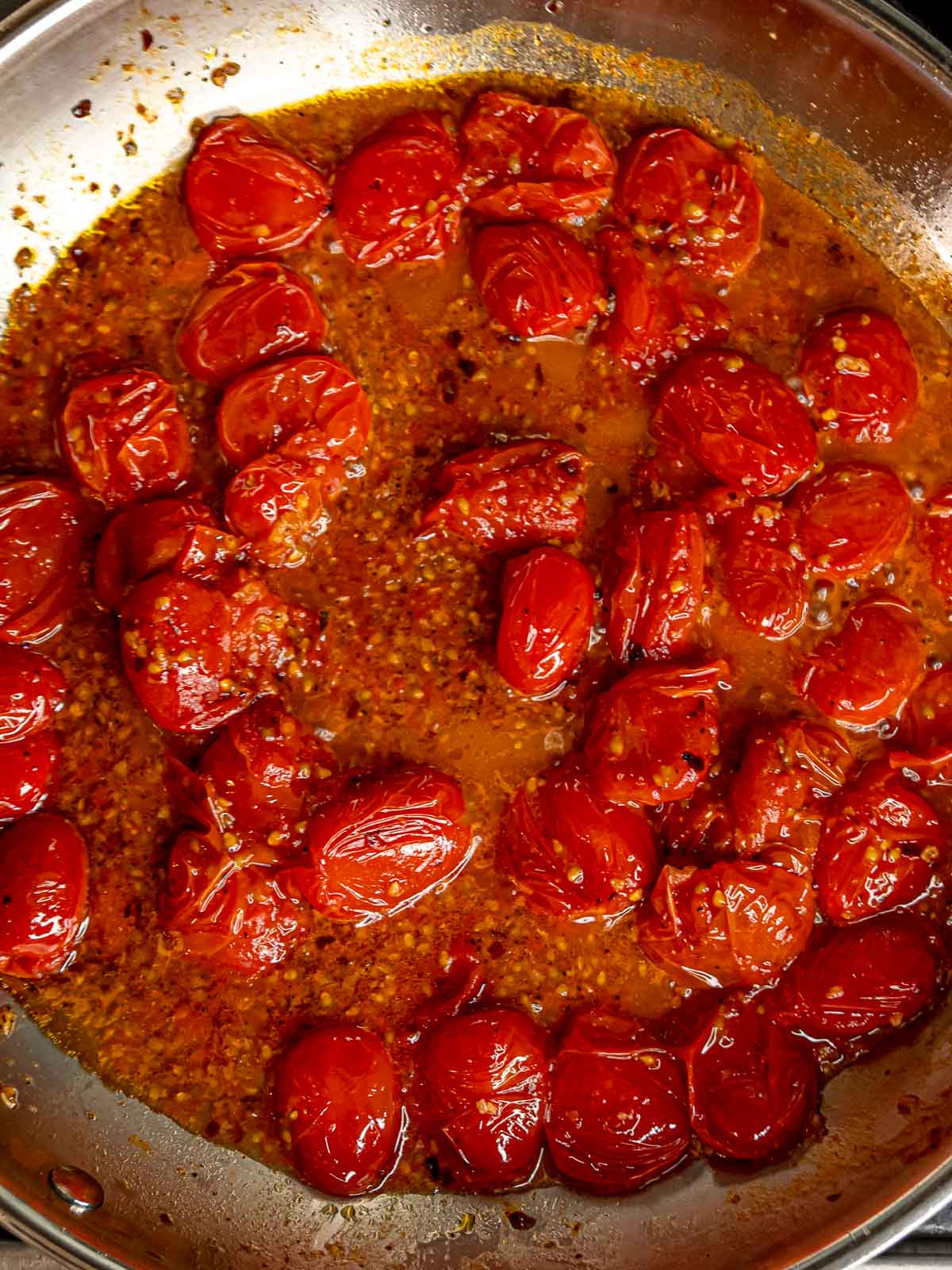
- Step 2: Stir everything together and cook for 15-20 minutes, stirring occasionally. As the tomatoes soften, use the back of a wooden spoon or potato masher to gently press down on them. You'll hear them pop and see the juices rush out. That's exactly what you want.
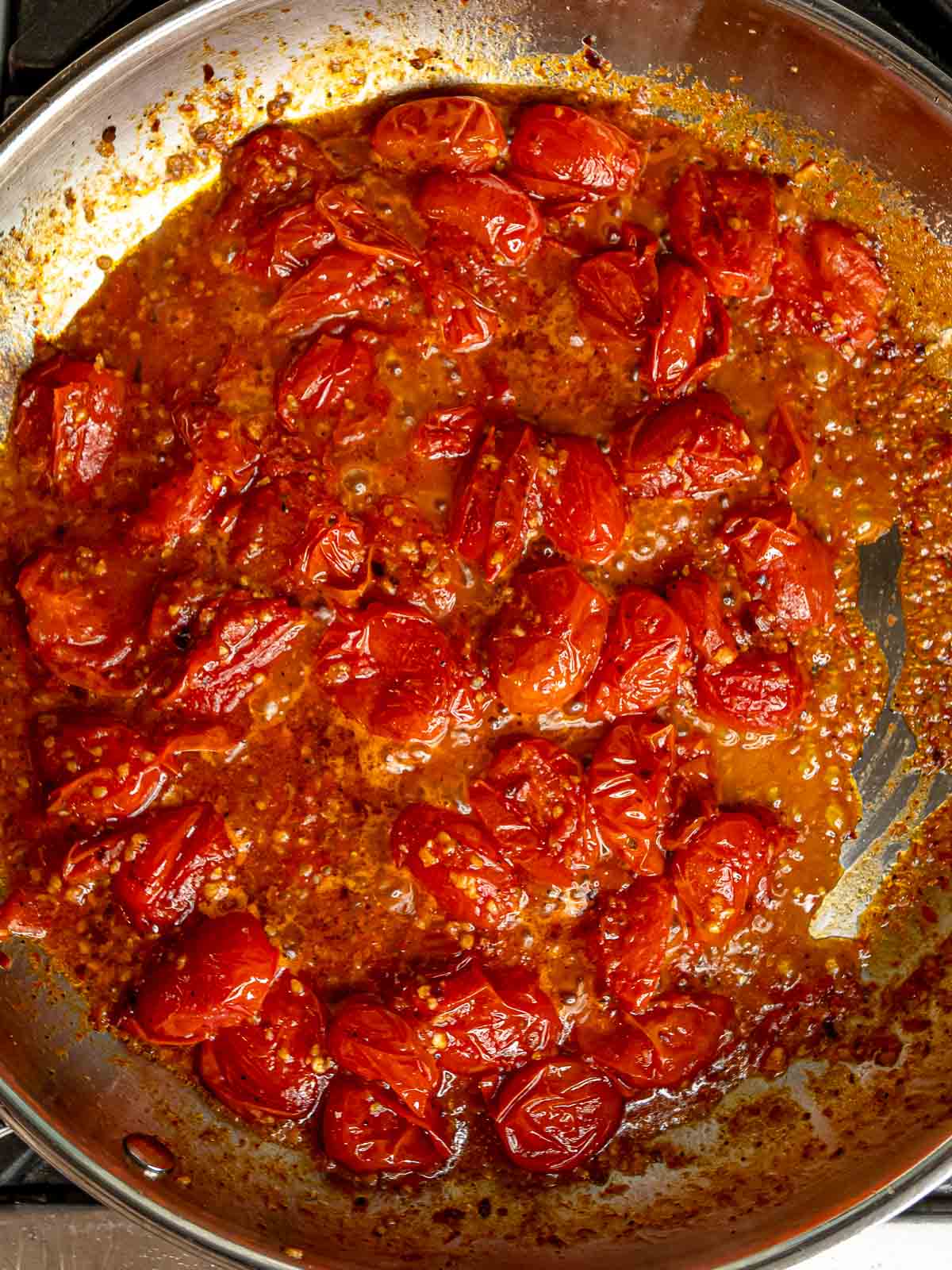
- Step 3: By the end, you should have a loose, jammy sauce with some whole pieces of tomato still intact. The color will deepen, and the edges of the pan will start to look glossy.
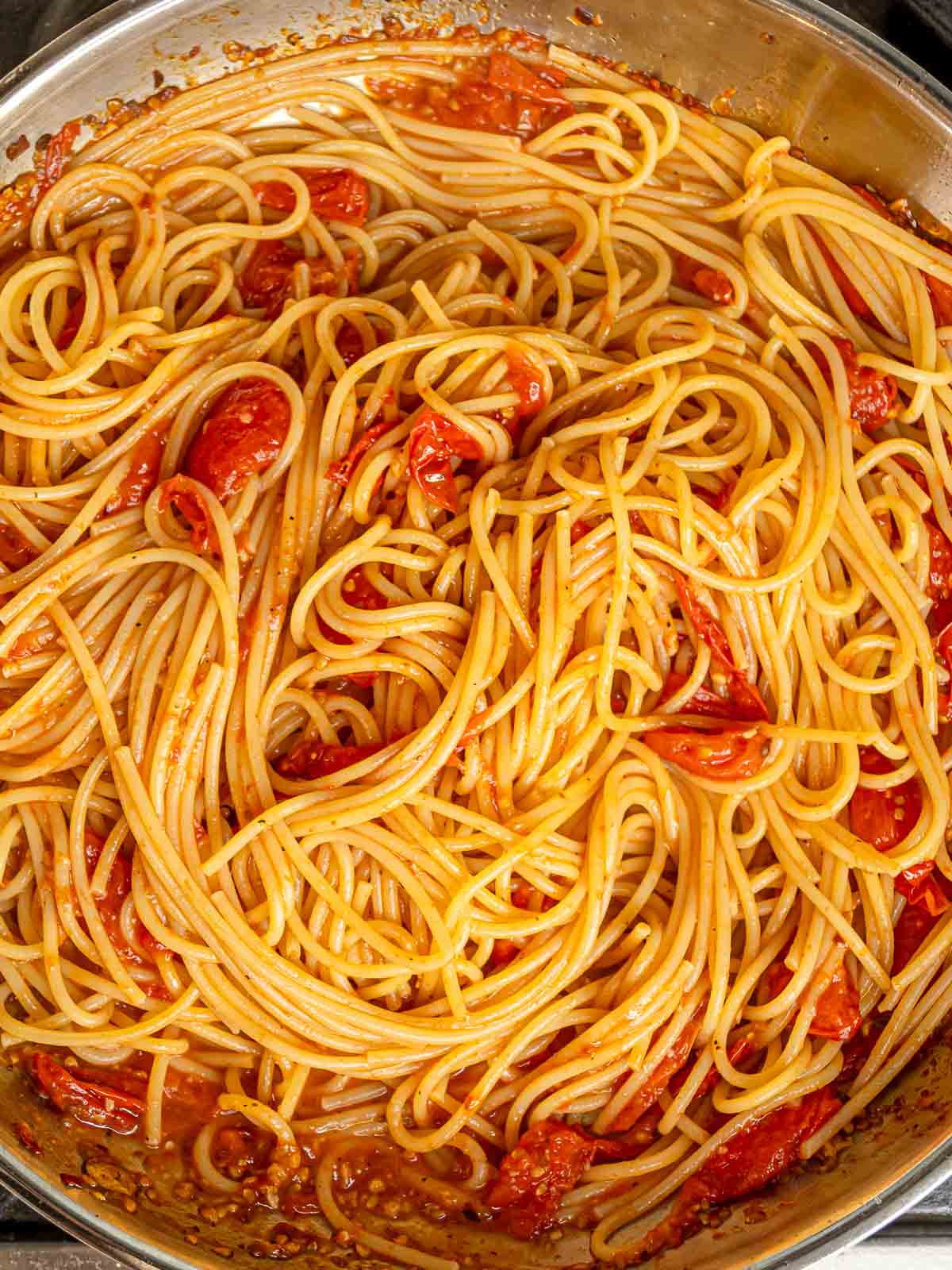
- Step 4: Add the cooked pasta to the skillet and toss to coat. Pour in a splash of the reserved pasta water (start with about ¼ cup) and toss everything together. The starchy water helps the sauce cling to the pasta, giving it a glossy, restaurant-style finish. Add more pasta water as needed to reach your preferred consistency. Remove from the heat and stir in the fresh basil. Tearing the basil (rather than chopping it) preserves the flavor's brightness and releases the oils without bruising the leaves. Serve immediately with a generous shower of Parmesan.
Sarah's Top Tips
- Don't skip the reserved pasta water. I know it sounds like a small detail, but it genuinely changes the texture of the finished dish. The starch in the water acts as a natural thickener and emulsifier, helping the olive oil and tomato juices bind together into a cohesive sauce instead of staying separate. I tested this both ways, and the difference was noticeable. The pasta without the added water tasted drier, and the sauce slid right off the noodles. A ¼ cup splash is all you need to transform it.
- Don't rush the tomatoes. The magic of this sauce happens in the 15 to 20-minute window where the tomatoes slowly burst and collapse. I tested this recipe at a higher heat, and the result was thinner and less flavorful. Medium heat gives the tomatoes time to caramelize slightly around the edges and develop a deeper, sweeter flavor. If you notice them sticking at any point, add a small splash of water and lower the heat slightly.
- Cook the garlic carefully. Thirty seconds is a short window, and burnt garlic will make the entire dish bitter. If your skillet is very hot when you add the garlic, give it only 20 seconds. As soon as it smells fragrant and just starts to turn golden at the edges, add the tomatoes.
Serving Suggestions
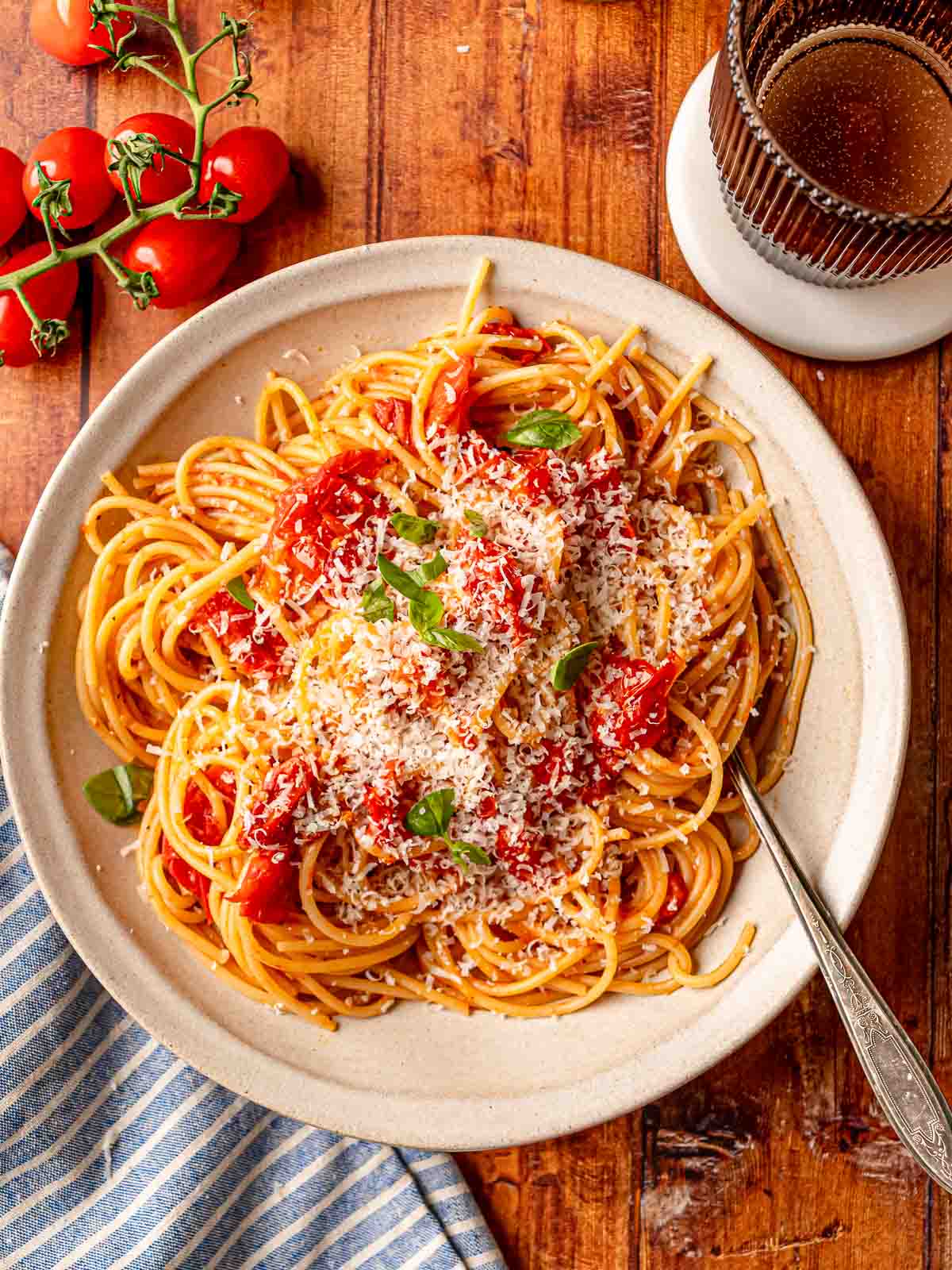
This pasta is a complete dinner on its own, but a few simple additions make it even better. For a protein, my Air Fryer Parmesan Crusted Chicken is a natural fit. The crispy, salty crust plays really well against the brightness of the tomato sauce, and it comes together quickly enough to run alongside the pasta with no stress. Pan seared shrimp added right to the skillet at the end is a favorite. You can also add white beans for a heartier vegetarian option.
For a salad, Steak Caesar Salad with Homemade Dressing is a crowd-pleasing option if you want to turn this into more of a full spread. If you're keeping things lighter, Grilled Peach Salad with prosciutto and burrata is a gorgeous summer pairing that echoes the fresh, Italian flavors in the sauce. And of course, crusty bread for soaking up the sauce is never a bad idea.
Storage & Reheating
Fridge: Store leftovers in an airtight container in the fridge for up to 4 days. The sauce thickens as it sits, so add a splash of water or broth when reheating to loosen it back up.
Freezer: This sauce freezes beautifully on its own (without the pasta). Let it cool completely, transfer to a freezer-safe container or zip-top bag, and freeze for up to 3 months. Thaw overnight in the refrigerator before using. If you're planning to freeze it, I'd recommend tossing the sauce with freshly cooked pasta after reheating rather than freezing the pasta and sauce together, since pasta can become mushy after freezing.
Reheating: Reheat the sauce in a skillet on the stovetop over medium-low heat with a splash of water or olive oil, stirring occasionally until warmed through. Toss with freshly cooked pasta or reheat pasta and sauce together, adding pasta water as needed. Microwave: Reheat in a microwave-safe bowl in 60-second intervals, stirring between each, until hot.
Did you make this recipe? Leave a ⭐️⭐️⭐️⭐️⭐️ rating and a comment below-I'd love to hear how it turned out! THANK YOU!
Fresh Cherry Tomato Pasta Sauce with Garlic and Basil
Video
Save this Recipe!
See the full post for extra tips and photos
Ingredients
- 12 ounces pasta of choice, I used spaghetti
- 2 tablespoons olive oil
- 4 cloves garlic, minced
- 2 pints cherry tomatoes
- ½ teaspoon red pepper flakes
- Salt and black pepper, to taste
- ¼ cup fresh basil, torn
- Parmesan cheese, for serving
Instructions
- Bring a large pot of salted water to a boil. Cook the pasta according to package directions until al dente. Reserve 1 cup of pasta water before draining.12 ounces pasta of choice
- While the pasta cooks, heat the olive oil in a large skillet over medium heat. Add the garlic and cook for about 30 seconds, stirring often, until fragrant.2 tablespoons olive oil, 4 cloves garlic
- Add the cherry tomatoes, red pepper flakes, salt, and black pepper. Cook for 15-20 minutes, stirring occasionally, until the tomatoes burst and release their juices. Use the back of a spoon to gently press the tomatoes as they soften.2 pints cherry tomatoes, ½ teaspoon red pepper flakes, Salt and black pepper
- Add the cooked pasta to the skillet and toss to coat. Add a splash of reserved pasta water as needed to loosen the sauce and help it cling to the pasta.
- Remove from the heat and stir in the fresh basil. Serve with Parmesan cheese.¼ cup fresh basil, Parmesan cheese
Sarah's Tips
- Don't skip the pasta water. The starch helps the sauce emulsify and cling to the pasta. Start with ¼ cup and add more as needed.
- Cook the tomatoes low and slow. Medium heat for the full 15-20 minutes gives you the best flavor and texture. High heat causes the liquid to evaporate too quickly.
- Season as you go. Taste the sauce after the tomatoes burst and adjust salt, pepper, and red pepper flakes to your preference before adding the pasta.
- Fresh basil only. Add it off the heat so it stays bright. Dried basil won't give you the same result.
- Garlic moves fast. It only needs 30 seconds. If it starts to brown before the tomatoes go in, it'll turn bitter.
- Leftovers keep in the fridge for up to 4 days. The sauce alone (without pasta) freezes well for up to 3 months.
Comments
No Comments