

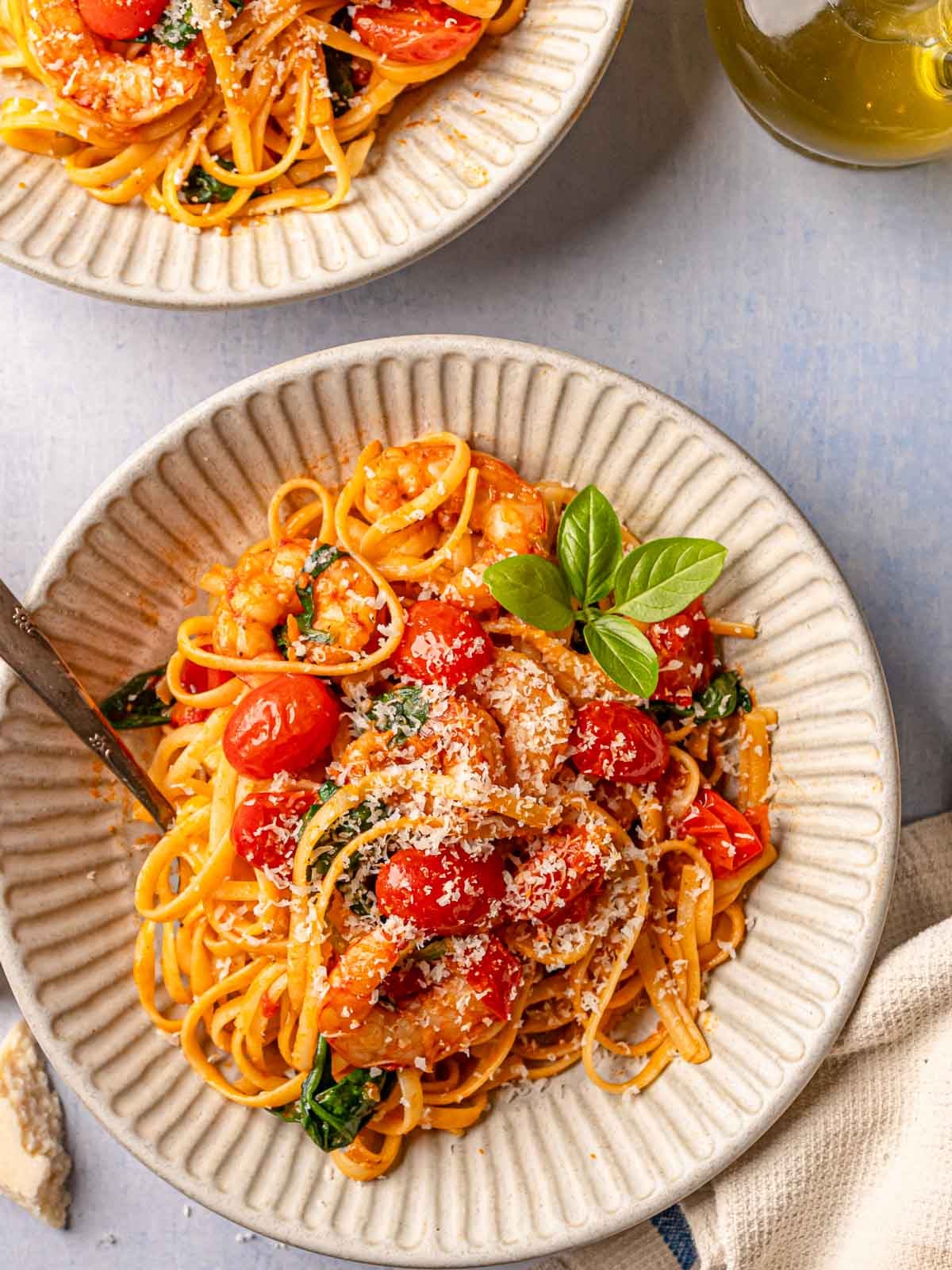
This spicy tomato shrimp pasta is exactly the kind of dinner I crave when I want something bold and satisfying without a long ingredient list. Juicy shrimp get seared until just pink, then tossed with spaghetti in a garlicky, blistered tomato sauce built on shallot, serrano pepper, and a spoonful of tomato paste for depth. A splash of reserved pasta water and a good handful of Parmesan pull it all into a glossy, clingy sauce, while a squeeze of lemon at the end keeps every bite bright instead of heavy. It's spicy, it's saucy, and it's on the table in about 30 minutes.
Jump to:
I made a version of this pasta on a whim about five years ago, and it's one of those recipes I've thought about ever since. It has that rare combination of tasting as if a lot of effort went into it, while actually being simple enough for a Tuesday night.
The trick is layering flavor in stages instead of dumping everything into the pan at once. Searing the shrimp first and setting it aside means it stays tender instead of turning rubbery while the sauce cooks. Cooking the tomato paste directly in the shallot and pepper mixture for a full minute, rather than just stirring it into the tomatoes, deepens its flavor and takes away any raw, tinny taste. Then the cherry tomatoes cook down just until they burst and release their juices, which is what turns this into a real sauce instead of a pile of pasta with tomatoes on top.
I always finish the dish in the skillet rather than draining the pasta and adding sauce on top separately. Tossing the spaghetti, shrimp, Parmesan, and lemon juice together directly in the pan with a splash of starchy pasta water is what makes the sauce cling to every strand instead of pooling at the bottom of the bowl. If you love that same quick-sear-and-toss method, my Shrimp Scampi with Angel Hair Pasta uses the exact same trick to get its glossy, clingy sauce.
Key Ingredients
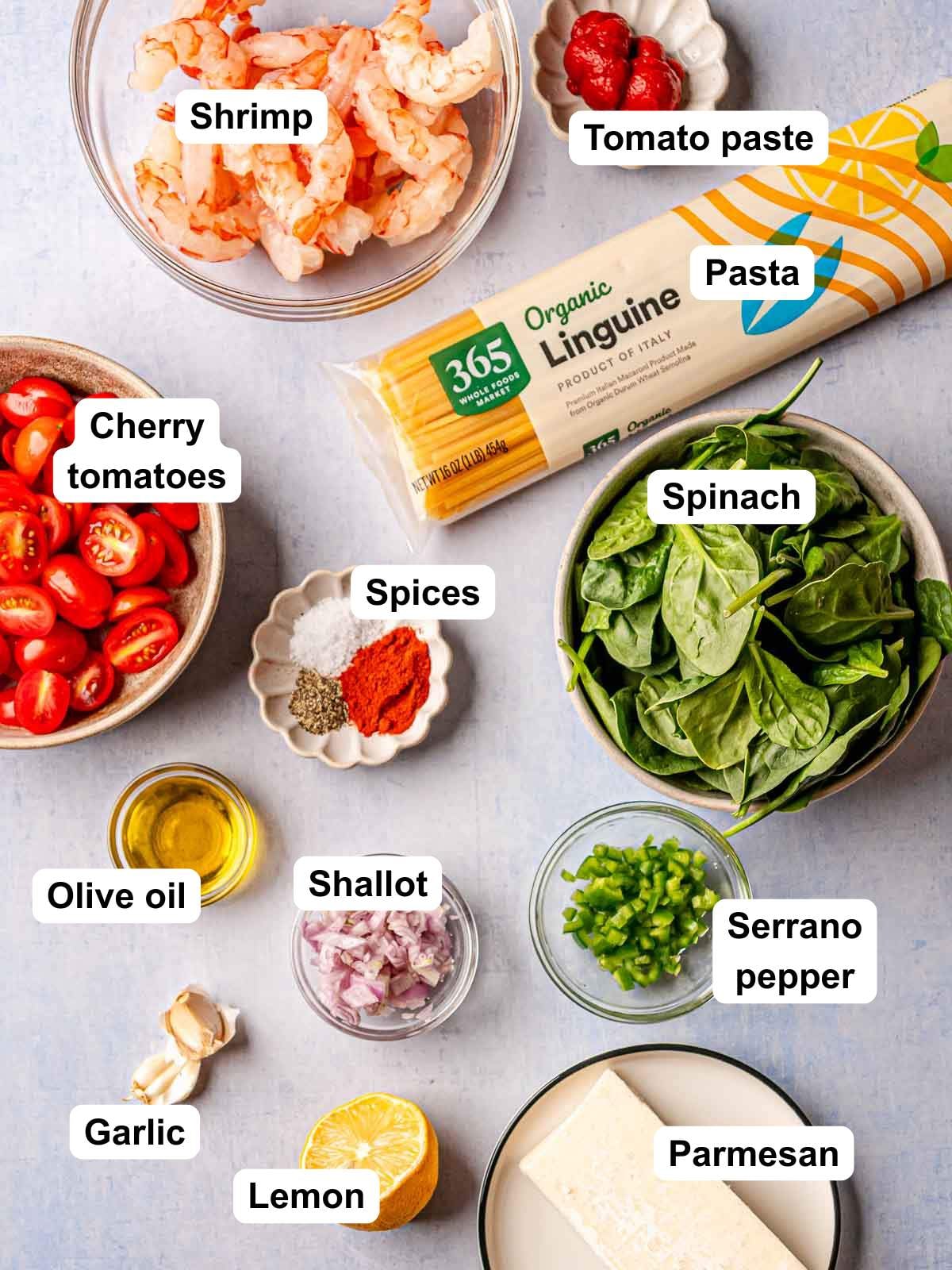
- Shrimp. Large shrimp, peeled and deveined, cook quickly and stay juicy in the short sear. Frozen shrimp works well here, too, just thaw them fully and pat them very dry so they sear instead of steam.
- Serrano pepper. Brings the signature heat. Swap in a jalapeño for a milder sauce, or a Fresno or Thai chile if you want more heat than a serrano provides.
- Shallot. Milder and slightly sweeter than a regular onion, which keeps the sauce from tasting sharp. In a pinch, a small amount of finely chopped yellow onion works, though the flavor will be a touch more pungent.
- Tomato paste. Cooking it briefly in the fat with the shallot and pepper concentrates its flavor and gives the sauce its deep, savory base. Don't skip the step of cooking it before adding the tomatoes.
- Cherry or grape tomatoes. These burst and break down quickly, giving you a fresh, chunky sauce in minutes. Canned diced tomatoes can work in a pinch, but you'll lose some of the bright, fresh flavor that fresh tomatoes provide.
- Reserved pasta water. The starch in this water is what helps the sauce cling to the pasta instead of separating. Always scoop some out before you drain, since you can't get it back afterward.
- Parmesan cheese. Adds salty, savory depth and helps thicken the sauce as it melts in. Grate it yourself if you can; pre-shredded Parmesan has anti-caking additives that can make the sauce grainy.
- Lemon juice. A small amount at the end cuts through the richness of the oil and cheese and keeps the dish tasting fresh instead of heavy.
- Spinach. Optional, but it wilts into the sauce in under a minute and adds color without changing the flavor much.
See the recipe card below for the remaining ingredients and quantities.
How to Make Spicy Tomato Shrimp Pasta
Step 1
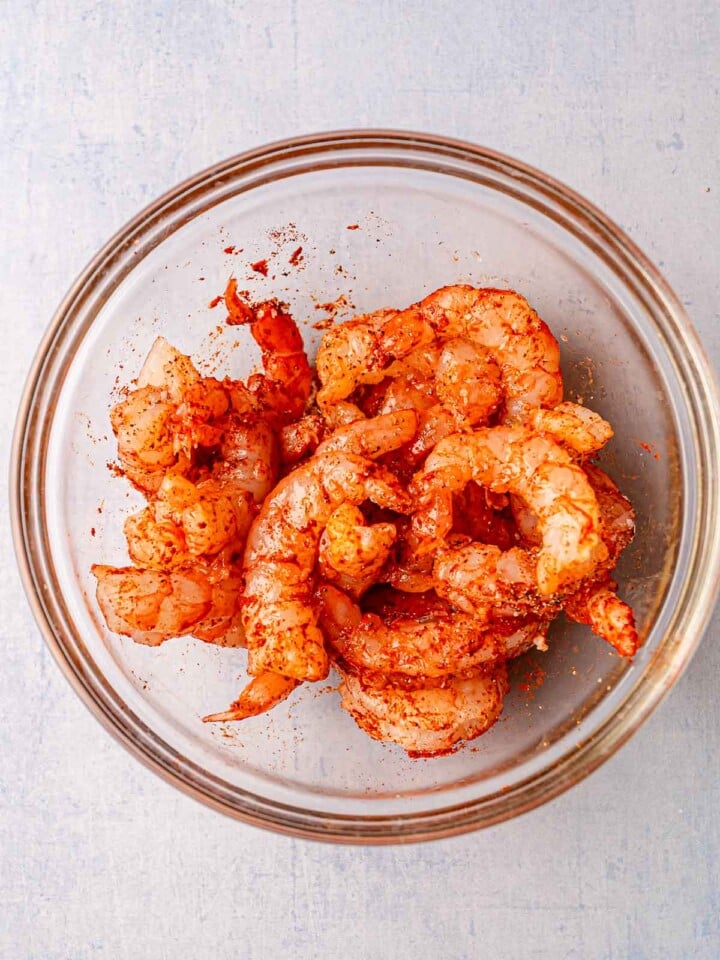
Bring a large pot of salted water to a boil and cook the spaghetti until al dente according to the package instructions. While the pasta cooks, pat the shrimp completely dry with paper towels (this matters more than it sounds like it should - wet shrimp will steam instead of sear). Season with paprika, salt, and black pepper. Heat 1 tablespoon of olive oil in a large skillet over medium-high heat. Add the shrimp in a single layer and cook for 1-2 minutes per side, until they turn pink and opaque with a light golden edge. Transfer to a plate - they'll finish cooking later when tossed back in, so it's okay if they look just barely done here.
Step 2
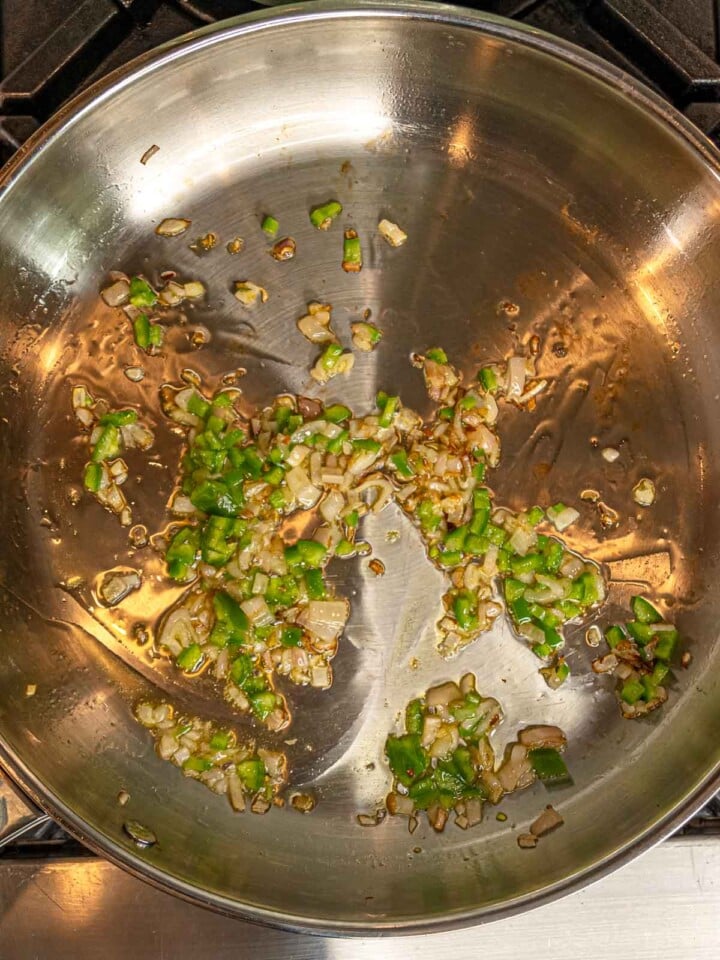
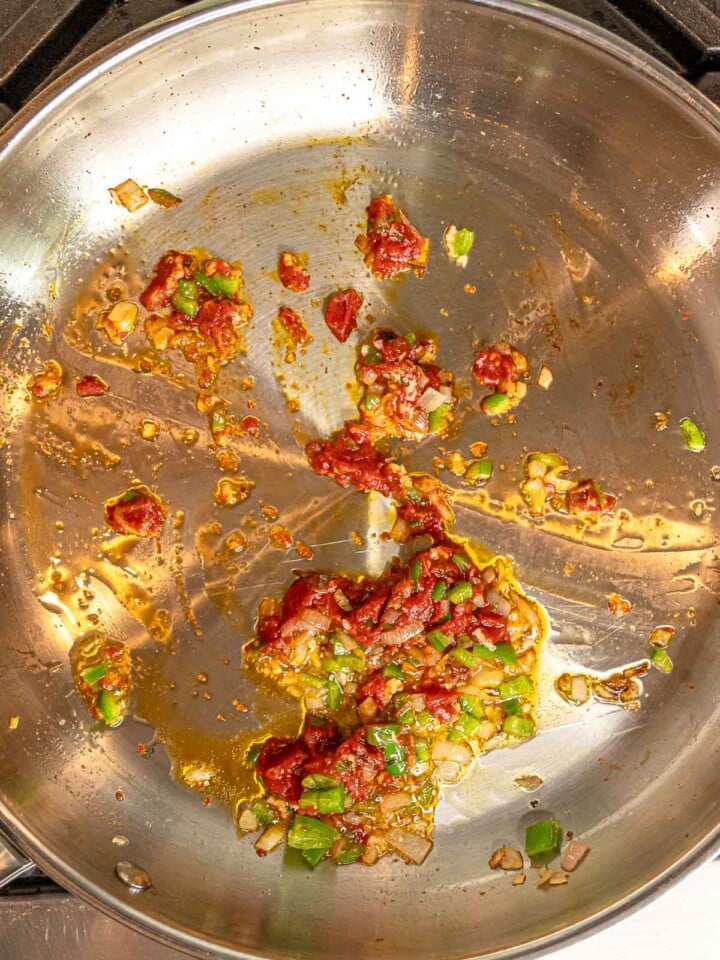
Reduce the heat to medium and add the remaining tablespoon of olive oil. Add the shallot and serrano pepper and cook for 2-3 minutes, stirring often, until softened and fragrant.
Step 3
Stir in the garlic and cook for about 30 seconds, just until fragrant. Add the tomato paste and cook for 1 minute, stirring it into the shallot mixture until it darkens slightly and smells rich and sweet rather than sharp.
Step 4
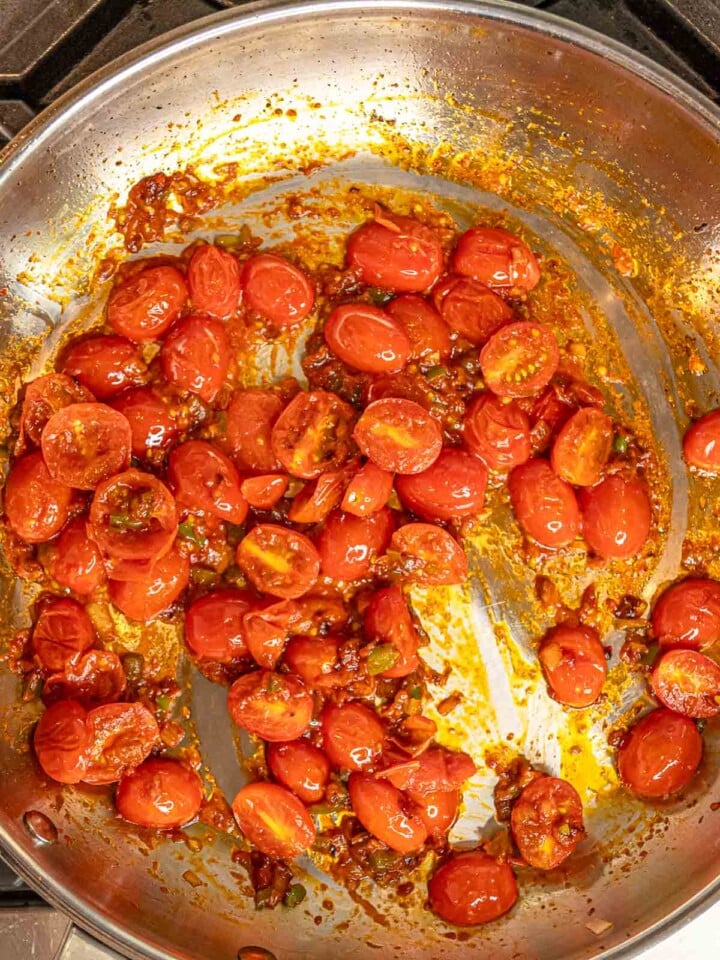
Add the cherry tomatoes and crushed red pepper flakes, if using. Cook for 4-5 minutes, stirring occasionally, until the tomatoes soften, blister, and release their juices into a loose, chunky sauce.
Step 5
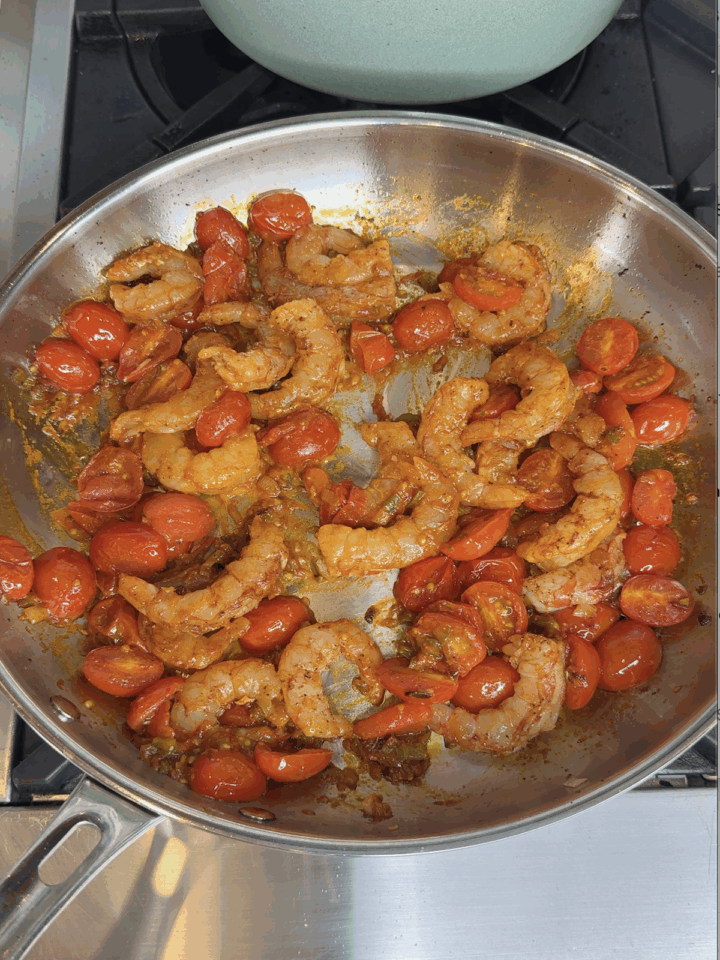
Add the seared shrimp back into the skillet along with any juices from the plate, stirring to coat them in the tomato sauce.
Step 6
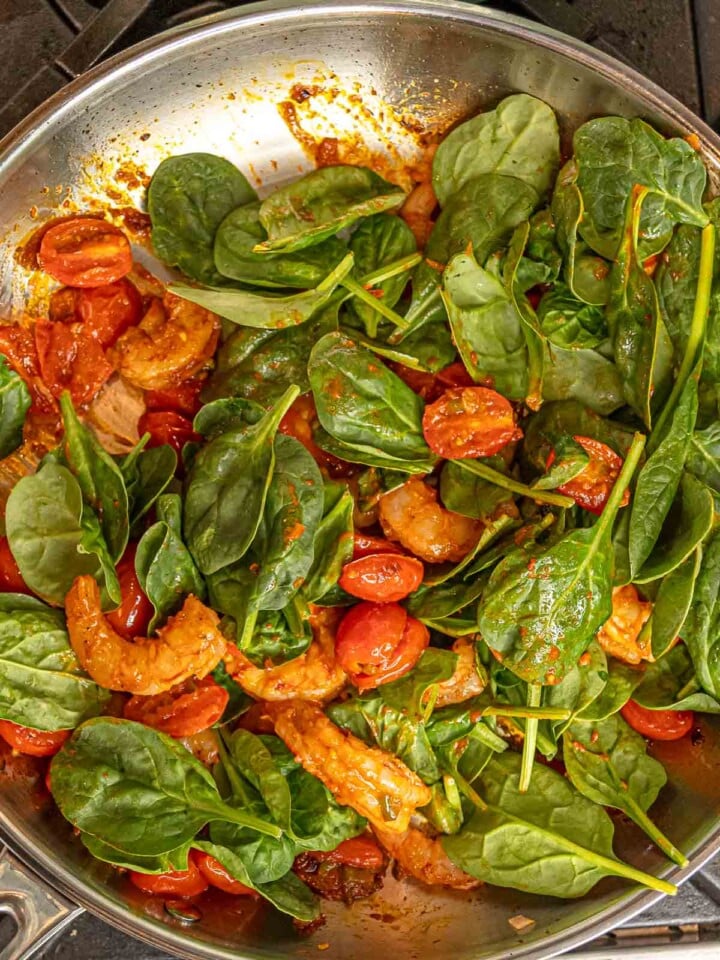
If using, add the spinach along with a splash of reserved pasta water. Stir just until it wilts down, about 30-60 seconds.
Step 7
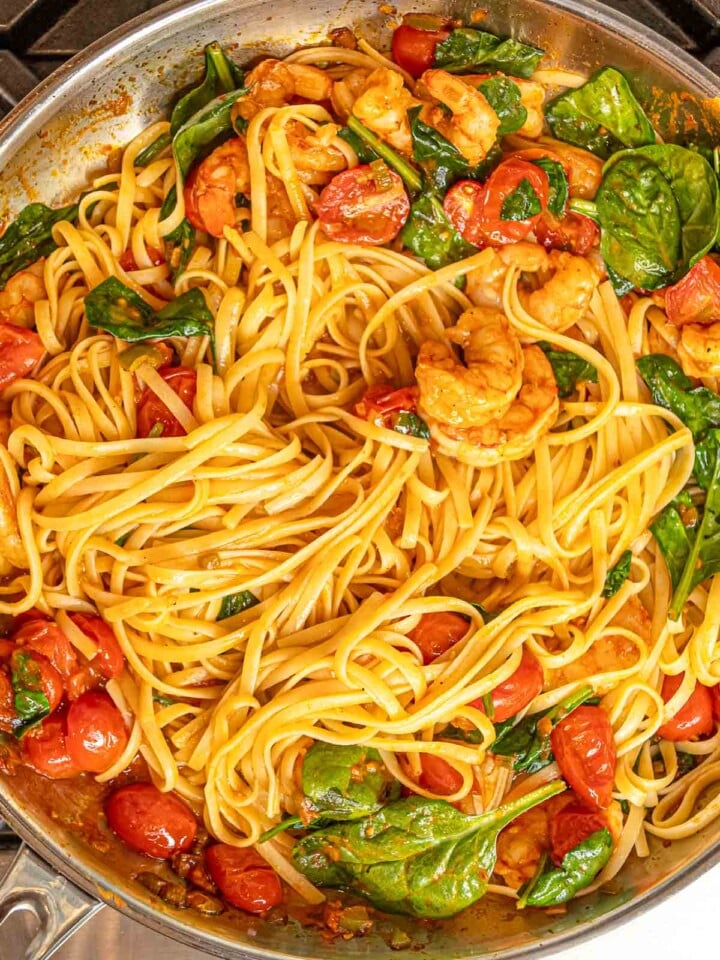
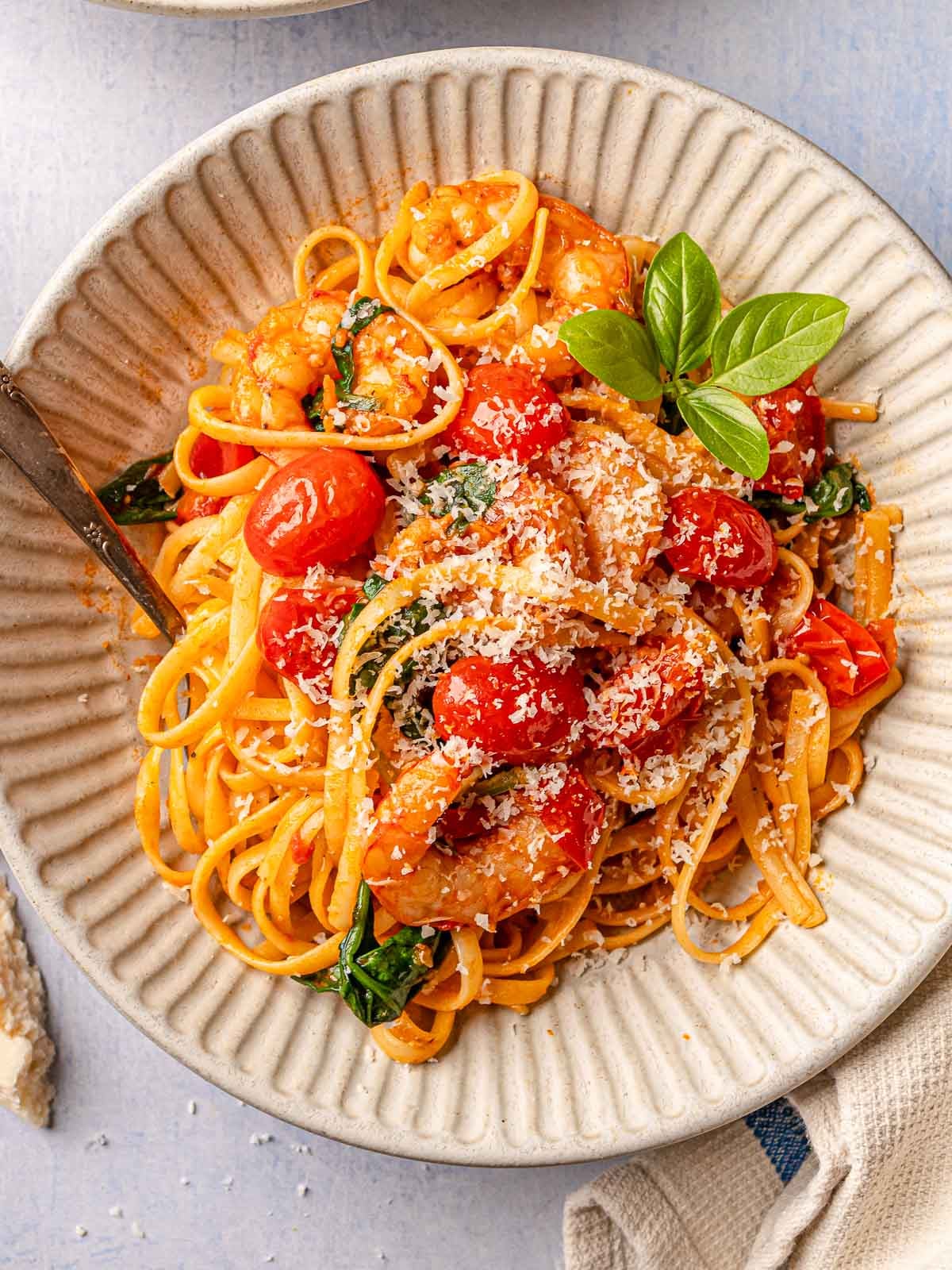
Add the cooked pasta, Parmesan, and lemon juice to the skillet. Toss everything until the pasta is glossy and evenly coated, adding more reserved pasta water a tablespoon at a time if the sauce needs loosening. The finished sauce should look glossy and slightly clingy, not dry or pasty.
Sarah's Top Tips
- Pat the shrimp bone-dry before searing. Any surface moisture creates steam in the pan, which keeps the shrimp from browning and can leave them a little rubbery. Take the extra minute with a paper towel - it makes a real difference in texture.
- Pull the shrimp early. Shrimp go from perfectly tender to tough in about a minute of overcooking. Take them out of the pan as soon as they turn pink, since they'll cook a little more when tossed back in with the hot pasta at the end.
- Cook the tomato paste before adding liquid. This is the step people are most likely to rush, and it's the one that gives the sauce its depth. Give it the full minute in the pan so it caramelizes slightly instead of tasting raw and tinny.
- Don't skip the pasta water. I tested this both with and without it, and the difference is significant - without it, the sauce sits on top of the pasta instead of coating it. Reserve more than you think you need; it's easy to add and impossible to get back once the pasta is drained.
- Taste the sauce before adding the pasta. This is your last chance to adjust the heat level. If it needs more kick, add a few reserved serrano seeds or extra red pepper flakes now.
Serving Suggestions
I like to keep the sides simple here since the pasta itself is the star of the meal. To start the meal the classic way, my Garlic Butter Mussels in White Wine Sauce share that same garlicky, wine-splashed flavor profile, so they set the tone nicely before the pasta arrives. On the side, my Spinach and Arugula Salad tossed in a light lemon vinaigrette echoes the citrus in the pasta and adds a fresh, peppery contrast to the richness of the sauce. If you'd rather serve something warm, my Easy Roasted Broccoli or Crispy Parmesan Green Beans both add color and a little crunch without competing with the main dish. For drinks, a chilled glass of dry white wine, like a Pinot Grigio or Sauvignon Blanc, complements the heat and acidity nicely without overpowering it.
Storage & Reheating
Refrigerator: Store leftovers in an airtight container in the refrigerator for up to 3 days. The sauce will thicken as it chills.
Freezer: This dish is best enjoyed fresh, since the shrimp can turn slightly rubbery after freezing and thawing. If you do freeze it, portion the cooled pasta into freezer-safe containers for up to 2 months and thaw overnight in the refrigerator before reheating.
Reheating: Warm leftovers gently in a skillet over medium-low heat with a splash of water or broth to loosen the sauce, stirring often. Microwaving works in a pinch, but use short 30-second intervals so the shrimp doesn't overcook and turn tough.
Make ahead: Chop the shallot, garlic, and serrano pepper, and halve the tomatoes up to a day in advance to make dinner come together even faster.
Did you make this recipe? Leave a ⭐️⭐️⭐️⭐️⭐️ rating and a comment below-I'd love to hear how it turned out! THANK YOU!
Spicy Tomato Shrimp Pasta
Video
Save this Recipe!
See the full post for extra tips and photos
Ingredients
- 8 ounces spaghetti or linguine
- 1 pound large shrimp, peeled and deveined
- 1 teaspoon paprika
- ½ teaspoon kosher salt, plus more for the pasta water
- ¼ teaspoon black pepper
- 2 tablespoons olive oil, divided
- 1 medium shallot, finely chopped
- 1 serrano pepper, finely chopped, seeds removed for less heat
- 3 garlic cloves, minced
- 2 tablespoons tomato paste
- 1 pint cherry or grape tomatoes, halved
- ½ teaspoon crushed red pepper flakes, optional
- 2 cups fresh spinach, optional
- ½ cup reserved pasta water, plus more as needed
- ¼ cup grated Parmesan cheese, plus more for serving
- 1 tablespoon fresh lemon juice
- Fresh basil or parsley, for serving
Instructions
- Bring a large pot of salted water to a boil. Cook the spaghetti until al dente according to package directions. Reserve at least ½ cup of pasta water before draining.8 ounces spaghetti or linguine
- While the pasta cooks, pat the shrimp dry. Season with paprika, salt and black pepper.1 pound large shrimp, 1 teaspoon paprika, ½ teaspoon kosher salt, ¼ teaspoon black pepper
- Heat 1 tablespoon of olive oil in a large skillet over medium-high heat. Add the shrimp and cook for 1-2 minutes per side, until pink and just cooked through. Transfer the shrimp to a plate and set aside.2 tablespoons olive oil
- Reduce the heat to medium. Add the remaining tablespoon of olive oil to the skillet. Add the shallot and serrano pepper and cook for 2-3 minutes, stirring often, until softened.2 tablespoons olive oil, 1 medium shallot, 1 serrano pepper
- Stir in the garlic and cook for 30 seconds. Add the tomato paste and cook for 1 minute, stirring it into the shallot and pepper mixture.3 garlic cloves, 2 tablespoons tomato paste
- Add the cherry tomatoes and crushed red pepper flakes, if using. Cook for 4-5 minutes, stirring occasionally, until the tomatoes begin to soften and release their juices.1 pint cherry or grape tomatoes, ½ teaspoon crushed red pepper flakes
- Add the seared shrimp back into the skillet along with any juices from the plate, stirring to coat in the sauce.
- Add the spinach, if using, and a splash of reserved pasta water. Stir until the spinach wilts.2 cups fresh spinach, ½ cup reserved pasta water
- Add the cooked pasta, Parmesan cheese and lemon juice to the skillet. Toss until everything is coated and glossy, adding more pasta water as needed to loosen the sauce. Serve topped with more Parmesan and fresh basil or parsley.¼ cup grated Parmesan cheese, 1 tablespoon fresh lemon juice, Fresh basil or parsley
Sarah's Tips
- Pat the shrimp completely dry before cooking so they brown instead of steam.
- Pull the shrimp as soon as they turn pink, since they finish cooking later when tossed back in with the hot pasta.
- Cook the tomato paste for the full minute before adding the tomatoes; this is what builds the sauce's depth.
- Reserve at least ½ cup of pasta water before draining, since it's what makes the sauce cling instead of pooling.
- Remove the seeds and ribs for a milder sauce, or leave a few in for more heat.
- Taste the sauce before tossing in the pasta; it's your easiest chance to adjust the spice level.
- No serrano on hand? A jalapeño makes an easy, milder swap.
- Leftovers keep for up to 3 days in the fridge; add a splash of water when reheating to loosen the sauce.
- Best enjoyed fresh, since the shrimp can turn rubbery if frozen and reheated.
Comments
No Comments