


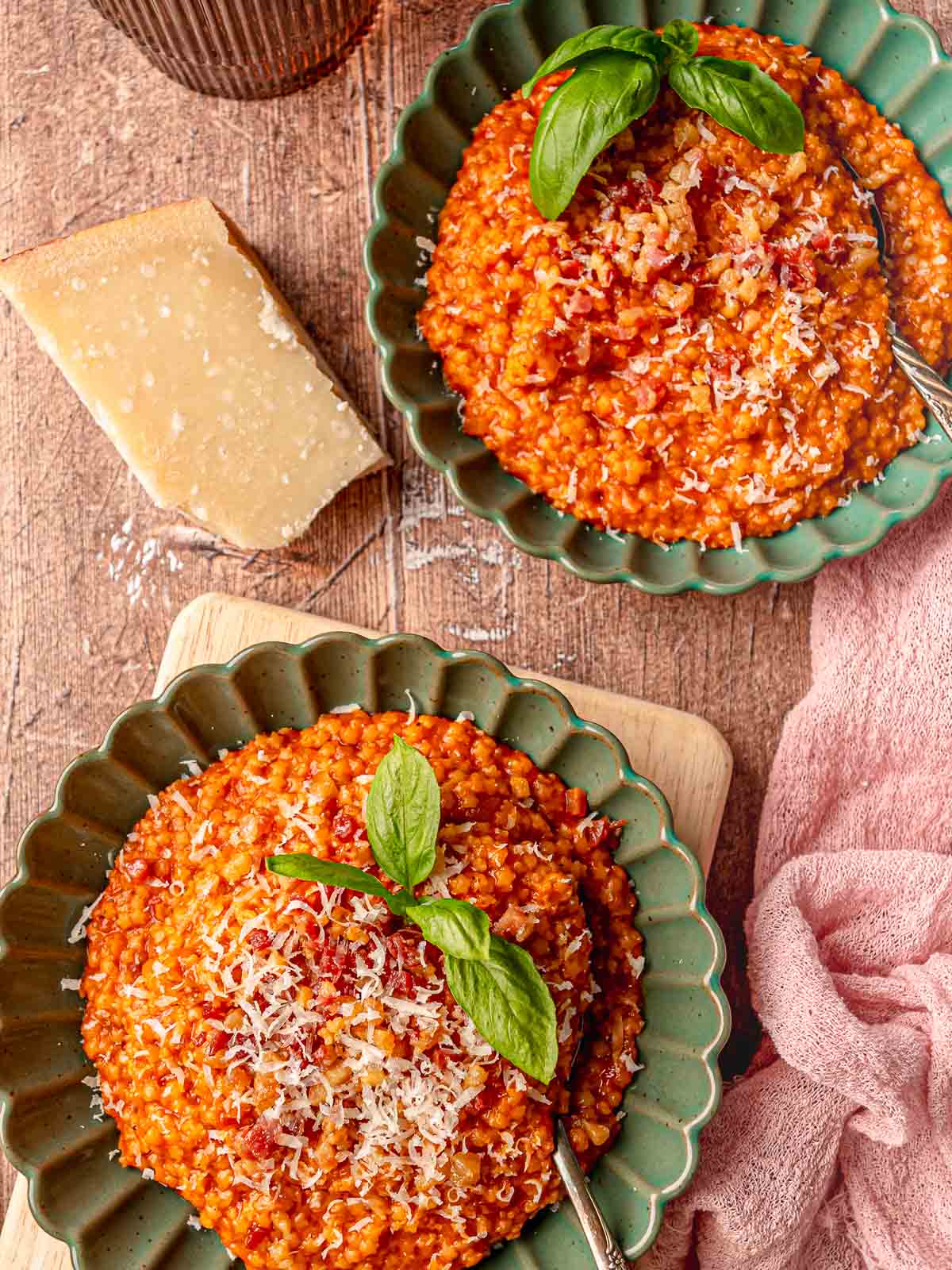
This tomato pastina is the kind of cozy Italian comfort food you'll want to make on repeat. Tiny pasta simmers in a rich tomato broth with shallots, garlic, Parmesan, and crispy guanciale until it turns creamy, savory, and spoonable. It comes together in about 30 minutes with simple pantry ingredients, but tastes like something you'd order at a little Italian trattoria. Perfect for chilly nights, quick weeknight dinners, or anytime you want something warm and comforting.
Jump to:
After testing this recipe a few different ways, I found that building flavor in layers makes all the difference. Rendering the guanciale first gives the broth a deep savory base, while cooking the tomato paste until it darkens slightly adds richness and sweetness instead of sharpness. I also tested batches with and without a Parmesan rind, and the rind adds a subtle umami depth that makes the broth taste as if it simmered for hours. If you don't have one, stirring in a little extra grated cheese at the end still makes the pastina deliciously creamy. If you've made my comforting pastina soup, you will love this one.
Key Ingredients
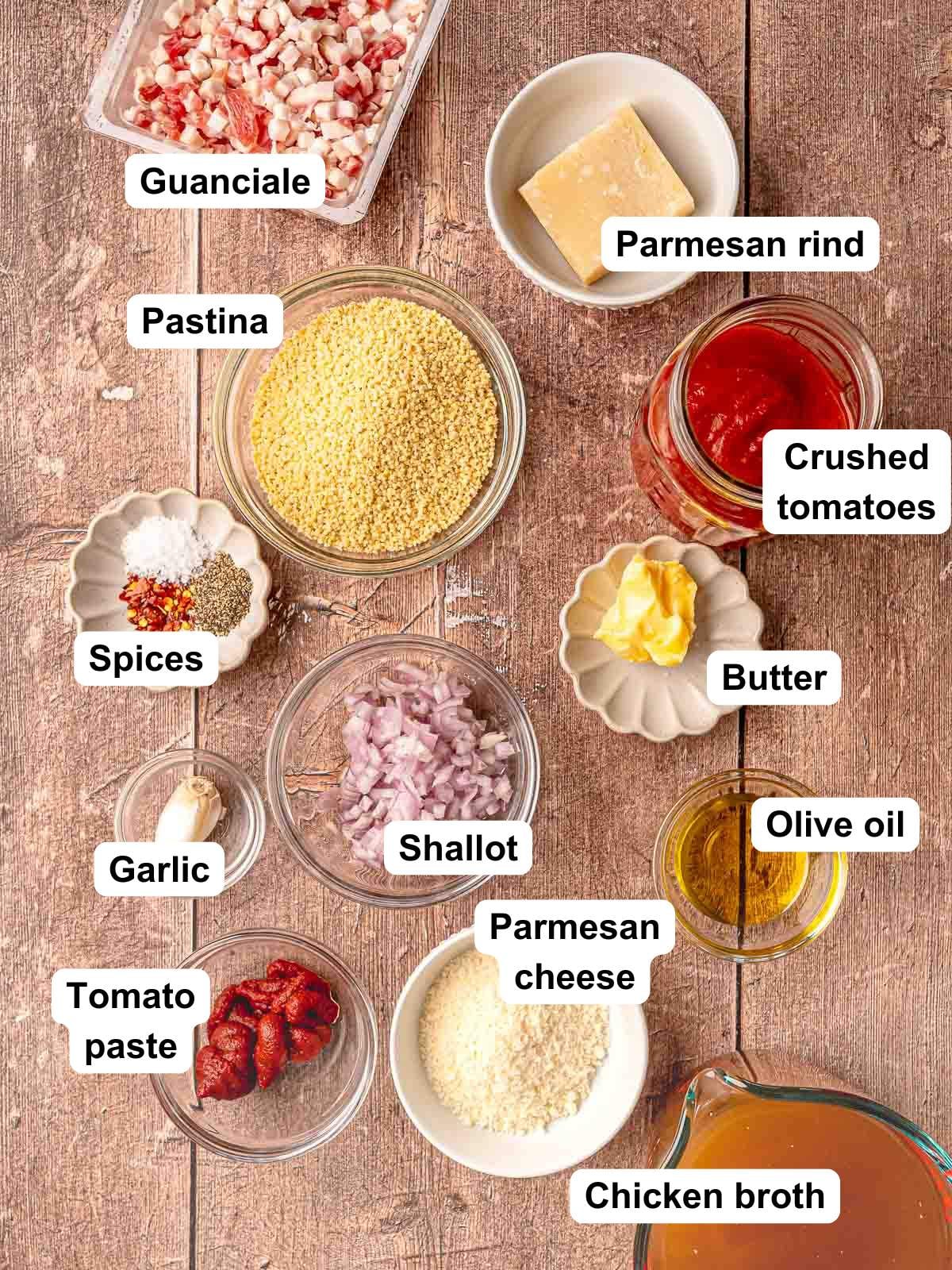
- Guanciale or pancetta. Guanciale gives this pastina a rich, savory flavor with silky, rendered fat that makes the broth taste incredibly luxurious. Pancetta works just as well if that's easier to find. Since guanciale comes from pork jowl, it has a slightly deeper and more traditional Italian flavor than pancetta, which comes from pork belly.
- Shallot and garlic. Shallot adds a mild sweetness that blends beautifully into the tomato broth without overpowering the dish like a larger onion sometimes can. Fresh garlic adds warmth and depth to the broth. I recommend finely mincing or grating the garlic so it melts right into the sauce.
- Tomato paste. Tomato paste gives the broth a concentrated tomato flavor and richness. Cooking it for a minute or two before adding the liquids helps deepen the flavor and removes any raw or acidic taste.
- Crushed San Marzano tomatoes. San Marzano tomatoes give the broth a smoother, sweeter flavor with lower acidity than standard canned tomatoes. They help create that classic Italian comfort food flavor.
- Pastina. Tiny pasta shapes like stelline or acini di pepe work best here. As the pasta cooks, it releases starch into the broth and creates the creamy, spoonable texture that makes pastina so comforting.
- Parmesan rind. This is one of my favorite tricks for adding deep umami flavor to soups and pasta dishes. The rind slowly infuses the broth with salty, nutty richness while the pastina simmers. If you don't have one, you can simply add extra grated cheese at the end.
- Crushed red pepper flakes. A small amount of red pepper flakes adds gentle warmth and balances the richness of the broth without making the dish spicy.
- Pecorino Romano or Parmigiano Reggiano. Freshly grated cheese melts into the broth and makes the pastina creamy and rich. Pecorino Romano gives a saltier, sharper flavor, while Parmigiano Reggiano tastes nuttier and milder.
See the recipe card below for the remaining ingredients and quantities.
Substitutions & Variations
- Use vegetable broth instead of chicken broth and omit the pancetta or guanciale for a meatless version.
- Swap shallot for yellow onion.
- Add baby spinach or peas near the end for extra vegetables.
- Use Parmigiano Reggiano for a milder flavor or Pecorino Romano for something saltier and sharper.
Instructions
Step 1
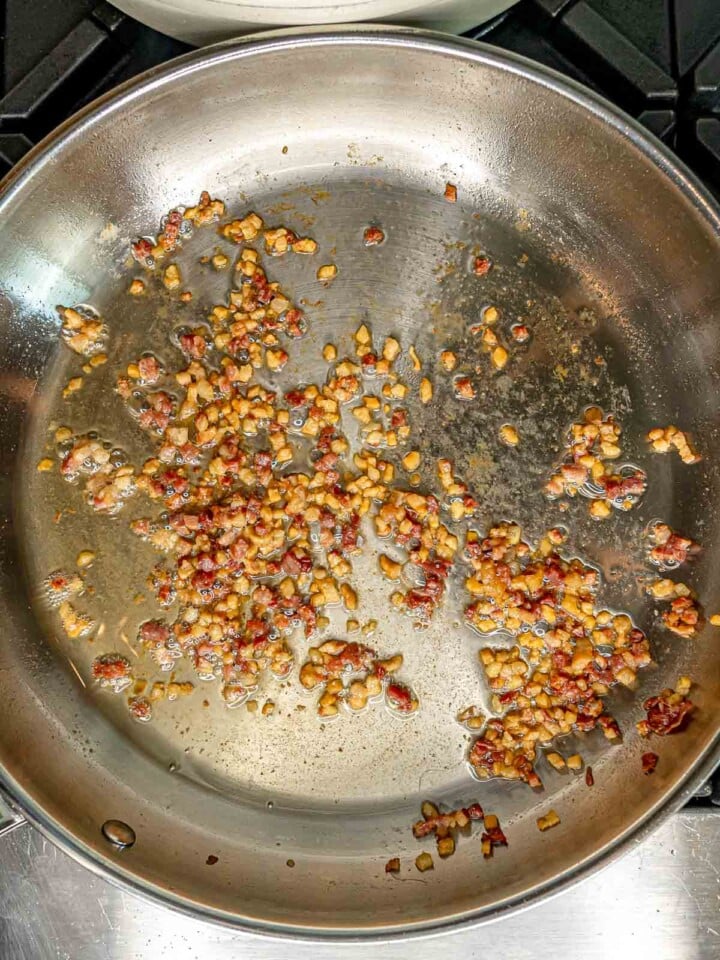
Add the diced pancetta or guanciale to a cold skillet and turn the heat to medium. Cook, stirring occasionally, until the fat slowly renders and the meat turns deep golden brown and crisp around the edges. Transfer the crispy pieces to a plate with a slotted spoon, leaving a thin layer of flavorful fat behind in the skillet.
Step 2
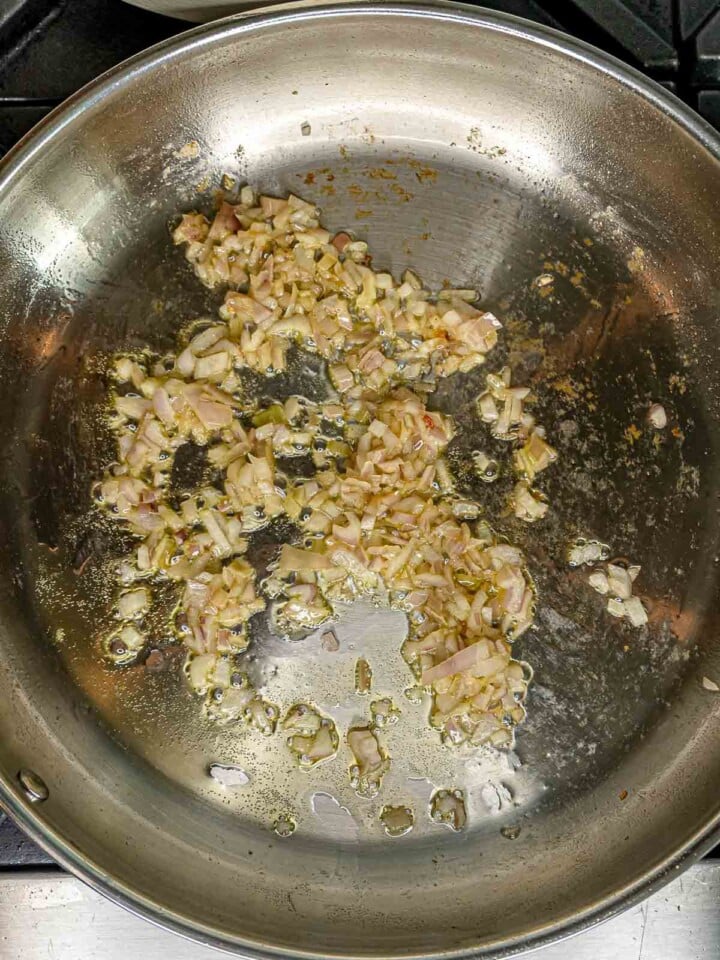
Add the olive oil, then stir in the shallot. Cook until softened and translucent, stirring occasionally so it gently softens without browning. Add the garlic and cook just until fragrant, about 30 seconds, being careful not to let it burn.
Step 3
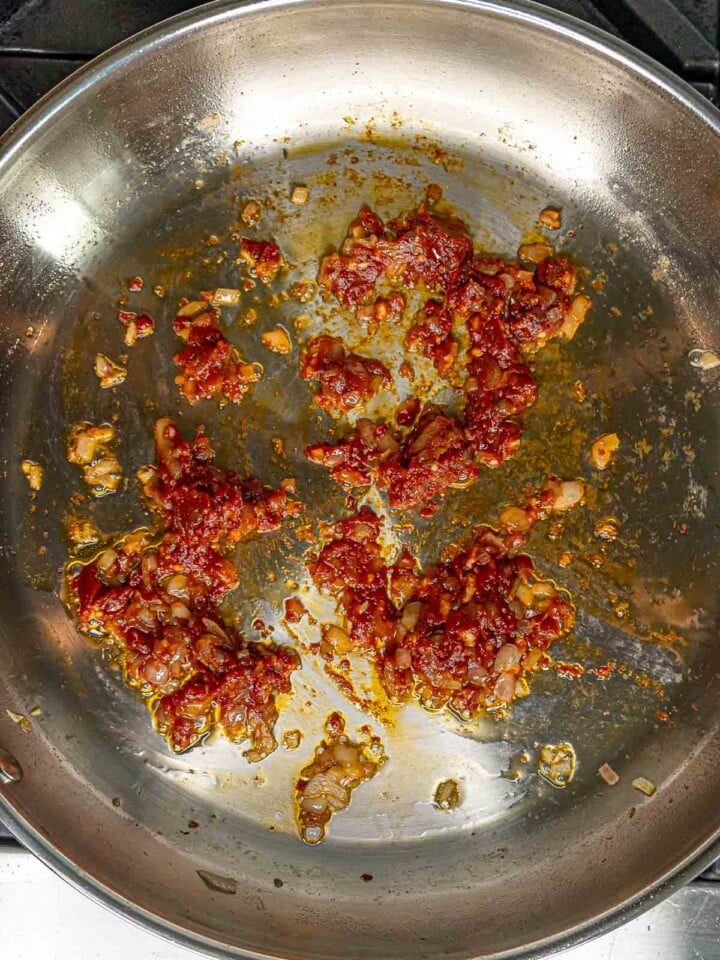
Stir in the tomato paste and cook until it darkens slightly and coats the shallots in a thick, brick-red layer. This step helps deepen the tomato flavor and removes any raw or acidic taste.
Step 4
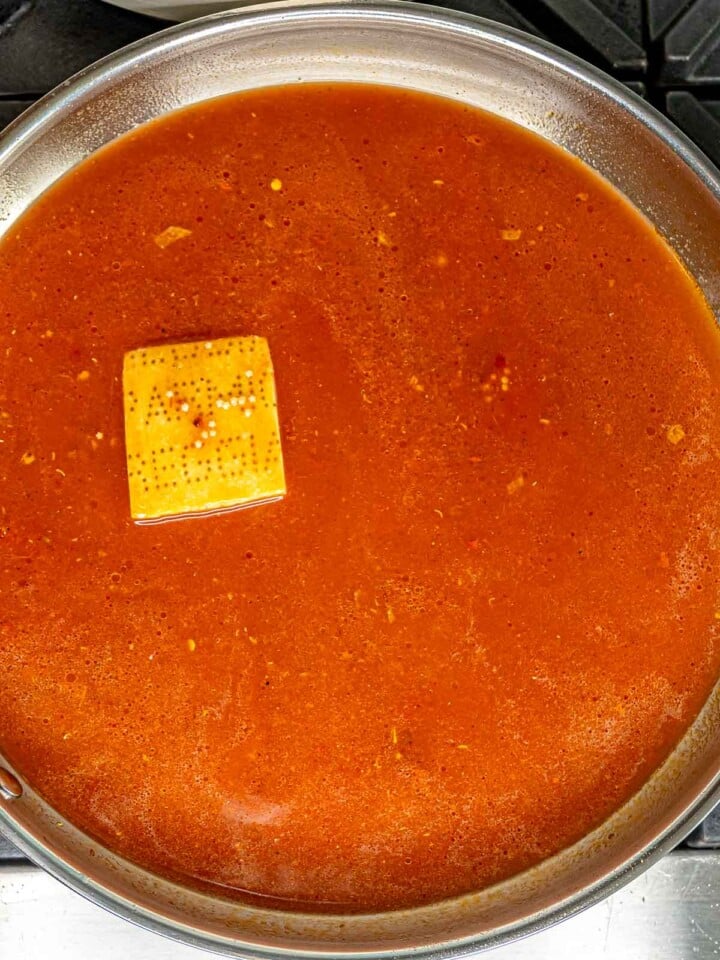
Pour in the crushed tomatoes and chicken broth, then stir in the pastina, Parmesan rind, crushed red pepper flakes, salt, and black pepper.
Step 5
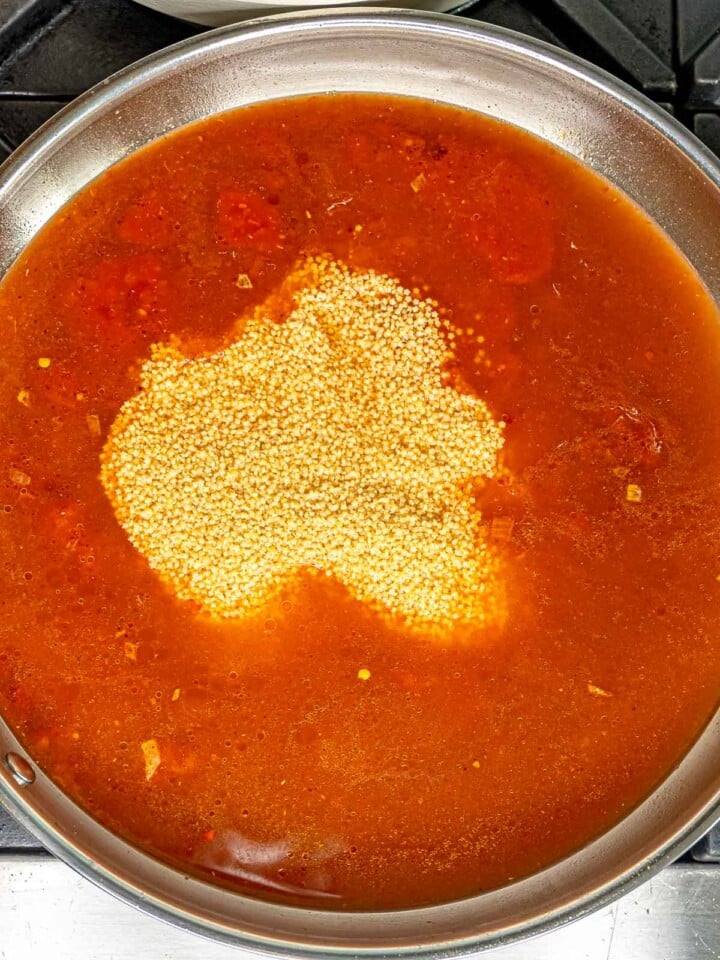
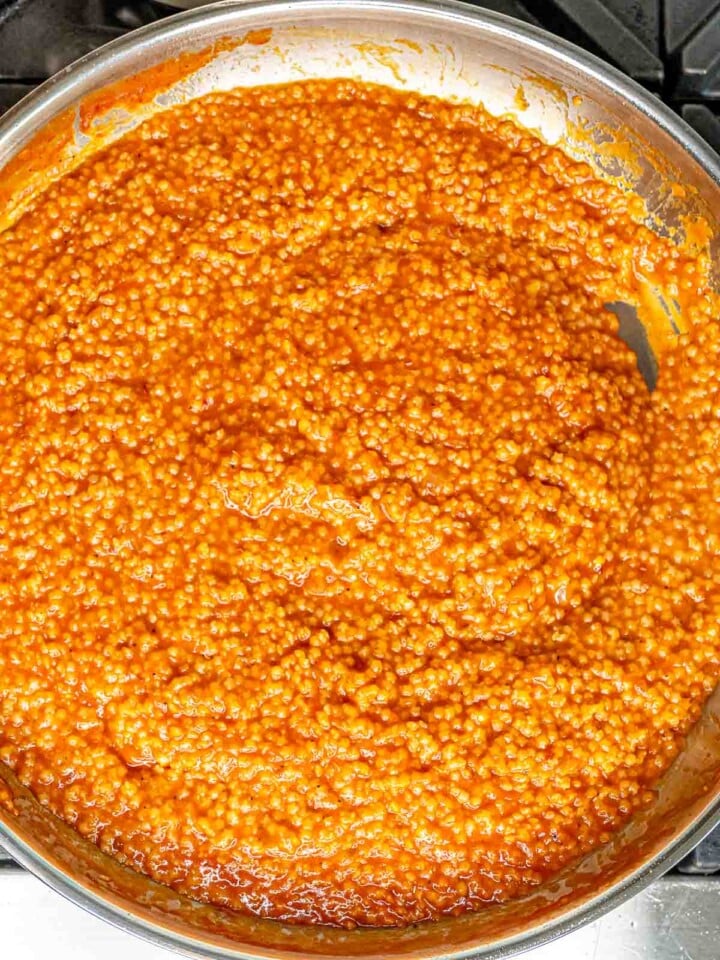
Bring the mixture to a gentle simmer, then reduce the heat slightly and cook uncovered, stirring often to keep the pasta from sticking. As the pastina cooks, the broth will thicken and become creamy and spoonable, similar to a loose risotto.
Step 6
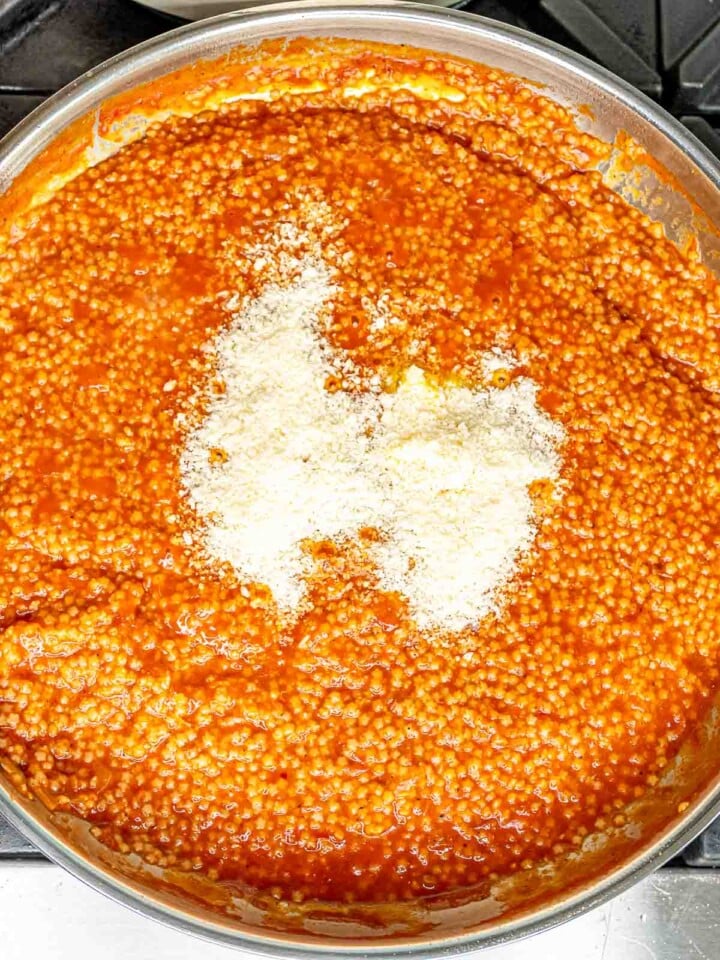
Remove and discard the Parmesan rind. Stir in the butter and grated cheese until fully melted and silky.
Step 7
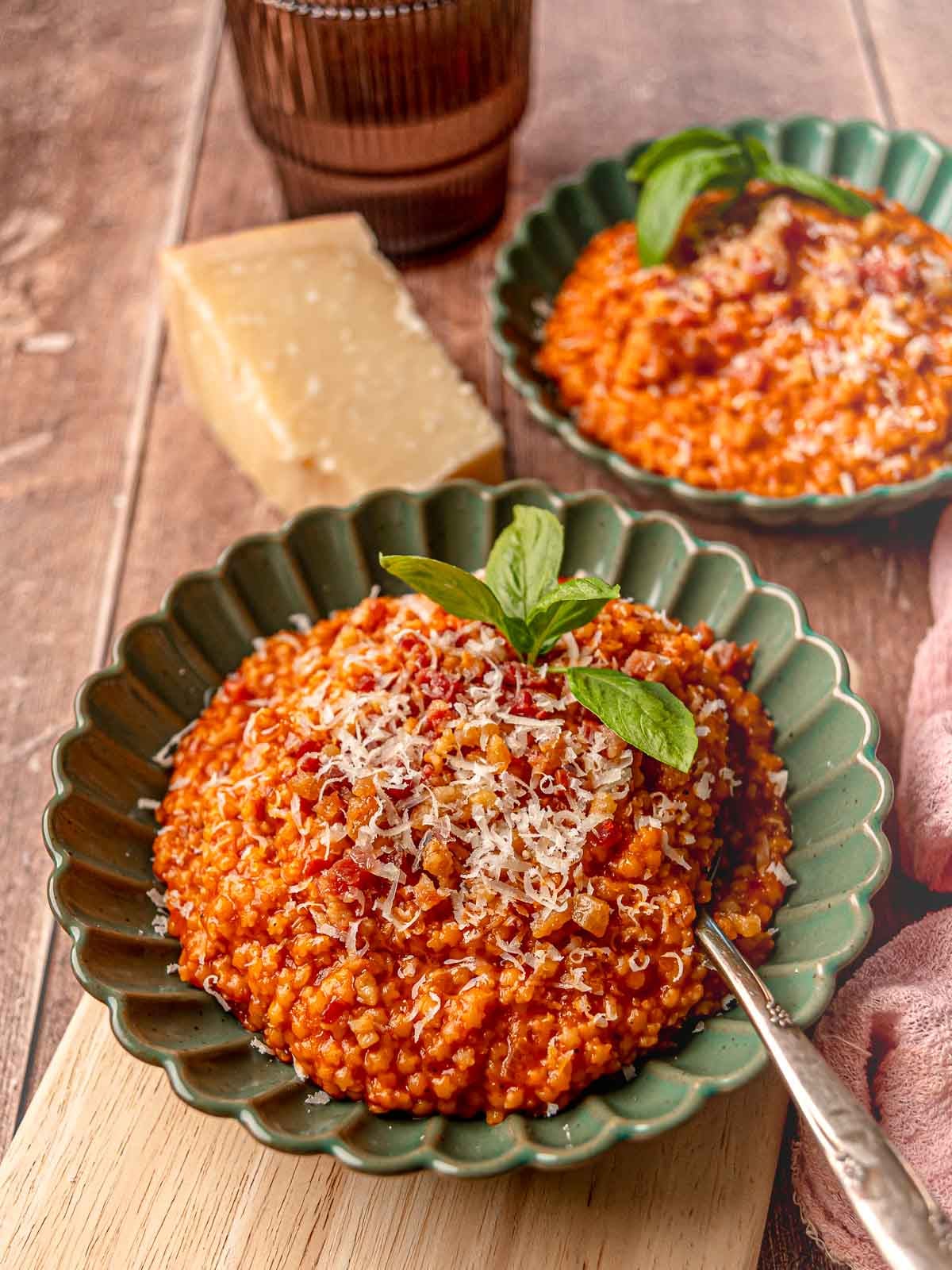
The finished pastina should look creamy and glossy, not dry or stiff. Taste and adjust the seasoning if needed. Spoon the warm pastina into bowls and top with the crispy pancetta or guanciale and extra grated cheese before serving.
Sarah's Top Tips
- Use a Parmesan rind if possible. I tested this recipe with and without a Parmesan rind, and it made a bigger difference than I expected. As it simmers, the rind releases salty, nutty flavor into the broth and gives the pastina a slow-simmered taste without extra cook time. If you don't have one, add a little extra Pecorino Romano or Parmigiano Reggiano at the end.
- Cook the tomato paste until it darkens. Don't rush this step. Letting the tomato paste cook for a minute or two until it turns brick red gives the broth a deeper, slightly sweeter flavor. When I added the liquids too early during testing, the tomato flavor tasted sharper and less balanced.
- Stir often toward the end. Pastina releases a lot of starch as it cooks, which is what gives the broth its creamy, risotto-like texture. As the pasta softens, the mixture thickens quickly and can start sticking to the bottom of the pot if left alone too long. Stirring often near the end keeps everything smooth, creamy, and evenly cooked.
- Serve it right away. Pastina continues absorbing broth as it sits, even after the heat is off. I found the texture is creamiest and most luxurious right after cooking, while it's still loose and spoonable. If it thickens too much before serving, stir in a splash of warm broth until it loosens back up.
- Freshly grated cheese melts best. Freshly grated cheese melts much more smoothly into the hot broth than pre-shredded cheese. Pre-shredded cheese contains anti-caking agents that can make the texture slightly grainy instead of silky. For the smoothest finish, grate the cheese yourself right before adding it to the pot.
Serving Suggestions
This tomato pastina is perfect for chilly evenings, lazy weekends, or simple weeknight dinners when you want something warm and comforting without much effort. I love serving it with crusty bread, a simple grilled zucchini salad, or roasted vegetables for an easy Italian-inspired meal. You can also top it with extra Pecorino Romano, fresh basil, cracked black pepper, or even a drizzle of chili oil for extra flavor.
Storage & Reheating
Fridge: Store leftover pastina in an airtight container in the refrigerator for up to 4 days. The pasta will continue soaking up the broth as it sits, so expect the texture to thicken quite a bit.
Freeze: Transfer cooled pastina to a freezer-safe container and freeze for up to 2 months. For the best texture, thaw it overnight in the refrigerator before reheating.
Reheat: Warm the pastina gently on the stove or in the microwave and stir in extra chicken broth or water as needed to loosen the texture and bring back the creaminess. I like reheating it slowly over low heat so the cheese stays smooth and silky.
Did you make this recipe? Leave a ⭐️⭐️⭐️⭐️⭐️ rating and a comment below-I'd love to hear how it turned out! THANK YOU!
Tomato Pastina with Guanciale (Creamy Italian Comfort)
Video
Save this Recipe!
See the full post for extra tips and photos
Ingredients
- 4 ounces diced pancetta or guanciale
- 2 tablespoons olive oil
- 1 small shallot, finely diced
- 1 garlic clove, minced
- 2 tablespoons tomato paste
- 1 cup crushed San Marzano tomatoes
- 2 ½ cups low-sodium chicken broth
- ¾ cup pastina, stelline or acini di pepe
- Small Parmesan rind
- ¼ -½ teaspoon crushed red pepper flakes, to taste
- ½ teaspoon kosher salt, plus more to taste
- ¼ teaspoon black pepper
- 1 tablespoon butter
- ¼ cup finely grated Pecorino Romano or Parmigiano Reggiano, plus more for serving
Instructions
- Add the diced pancetta or guanciale to a cold skillet and turn the heat to medium. Cook, stirring occasionally, until the fat renders and the meat is golden and crisp, about 6-8 minutes. Transfer to a plate with a slotted spoon, leaving about 1 tablespoon of fat in the skillet.4 ounces diced pancetta or guanciale
- Add the olive oil to the skillet, then stir in the shallot and cook until softened, about 2-3 minutes. Add the garlic and cook for 30 seconds, just until fragrant.2 tablespoons olive oil, 1 small shallot, 1 garlic clove
- Stir in the tomato paste and cook for 1-2 minutes, letting it darken slightly and coat the shallots.2 tablespoons tomato paste
- Add the crushed tomatoes, chicken broth, pastina, Parmesan rind, crushed red pepper flakes, salt, and black pepper. Turn down the heat and bring to a gentle simmer and cook uncovered, stirring often, until the pastina is tender and the mixture thickens to a creamy, spoonable consistency, about 10-15 minutes.1 cup crushed San Marzano tomatoes, 2 ½ cups low-sodium chicken broth, ¾ cup pastina, Small Parmesan rind, ¼ -½ teaspoon crushed red pepper flakes, ½ teaspoon kosher salt, ¼ teaspoon black pepper
- Remove and discard the Parmesan rind. Stir in the butter and grated cheese until melted and creamy. Taste and adjust seasoning with additional salt if needed.1 tablespoon butter, ¼ cup finely grated Pecorino Romano or Parmigiano Reggiano
- Spoon into bowls and top with the crispy pancetta or guanciale and extra cheese.
Sarah's Tips
- Guanciale gives the richest flavor, but pancetta works great too.
- Cook the tomato paste until darkened for deeper flavor.
- Stir often while simmering to keep the pastina creamy.
- Add extra broth if the pasta thickens too much before serving.
- Freshly grated cheese melts best.
Comments
No Comments