

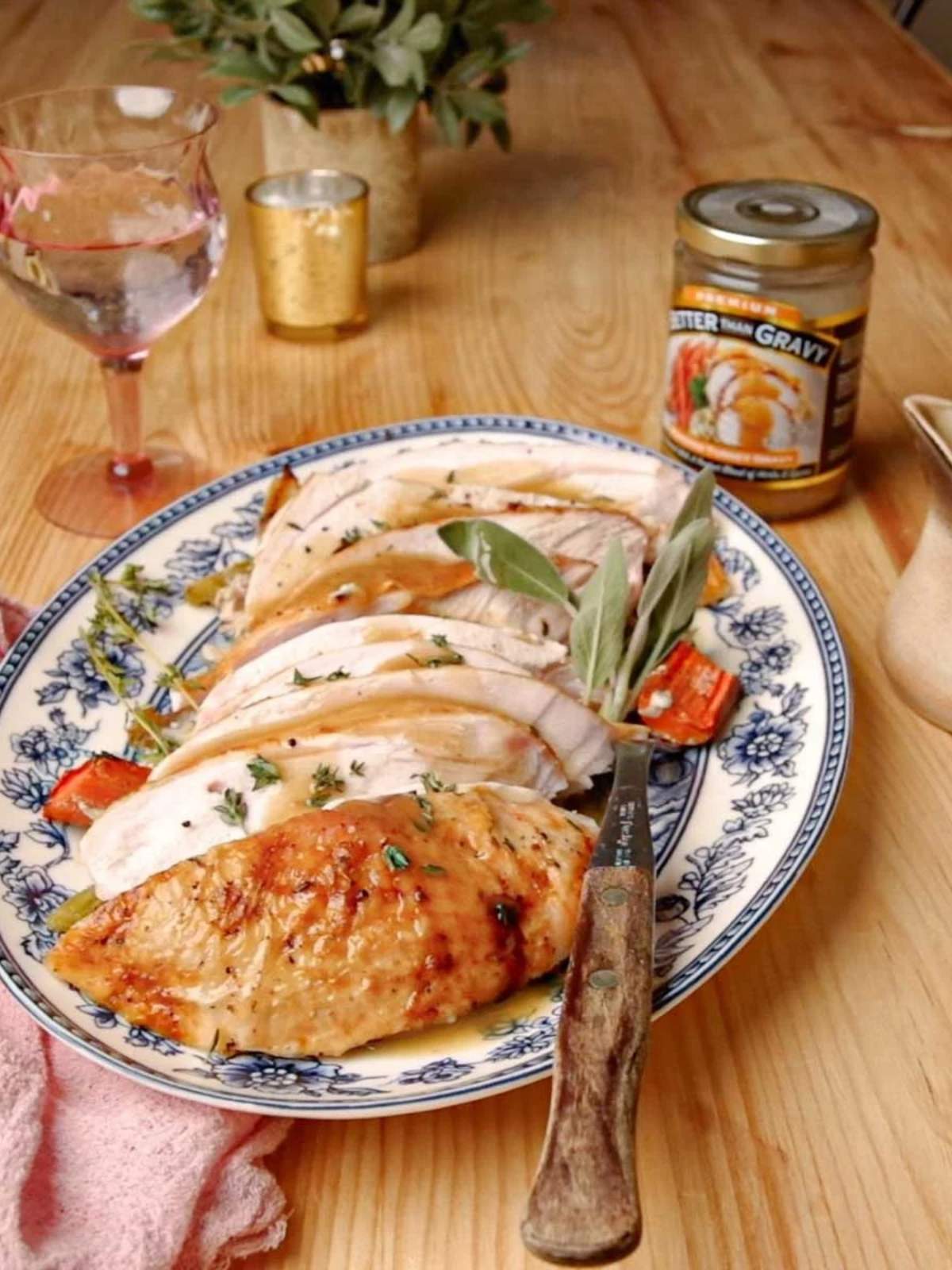
This roasted turkey breast is what I make when I want all the comfort of a holiday turkey without wrestling a 20-pound bird. I love a big Thanksgiving spread, but when I'm cooking for a smaller group, a whole turkey just feels like too much. A bone-in, skin-on turkey breast slathered with garlic herb butter is the way to go. Most of that butter goes right under the skin, which is my favorite little trick for keeping the meat juicy. Then it roasts low and slow at 325°F on a bed of onions and broth for about 1½-2½ hours. The skin turns deep golden and crisp, and the meat stays tender all the way through. It serves six, leaves plenty of room in the oven for your sides, and makes the whole house smell like Thanksgiving.
Jump to:
The Easier Turkey for a Smaller Thanksgiving
When I'm feeding a big crowd, my garlic butter Thanksgiving turkey is still the one I make. But when it's just six of us around the table, a whole bird is a lot of turkey and a lot of work. A turkey breast gives you that same holiday centerpiece with far less effort. It needs less time to thaw, it cooks in a lot less time, and it fits in a regular roasting pan instead of a giant one you have to wrestle in and out of the oven. There are no legs or wings to carve around, and you still have room in the oven for your sides. Most of my family goes straight for the white meat anyway, so you're making exactly what people will eat without a mountain of leftovers.
The tricky part with turkey breast is that it's so lean, which means it can dry out fast. That's the problem this recipe is built around. I tuck the herb butter underneath the skin, right on the meat, so it bastes the turkey from the inside as it melts. I also keep the oven at 325°F, because the lower heat gives the thick center time to cook through before the outside overcooks. And the onions and broth in the pan add gentle moisture while giving me a flavorful base for pan juices or gravy.
My favorite moment comes around the one-hour mark, when the whole kitchen smells like sage and garlic, and the skin starts turning a rich golden brown. That's how you know you're on the right track.
The Under-the-Skin Rule
Most herb butter turkey recipes spread the butter on top of the skin. I do the opposite, and it makes a real difference.
Butter spread on the outside mostly melts down into the pan. Butter tucked under the skin stays pressed against the meat the whole time it roasts. It seasons the turkey directly and keeps the leanest part of the breast moist. The last third of the butter still goes on the outside, because that's what helps the skin brown and crisp.
To loosen the skin, start at the wide end of the breast and gently slide your fingers between the skin and the meat. Work slowly so the skin doesn't tear, and keep it attached around the edges. That little pocket holds the butter in place. Once the butter is inside, press on the outside of the skin with your palm to spread it into an even layer.
Key Ingredients & Substitutions
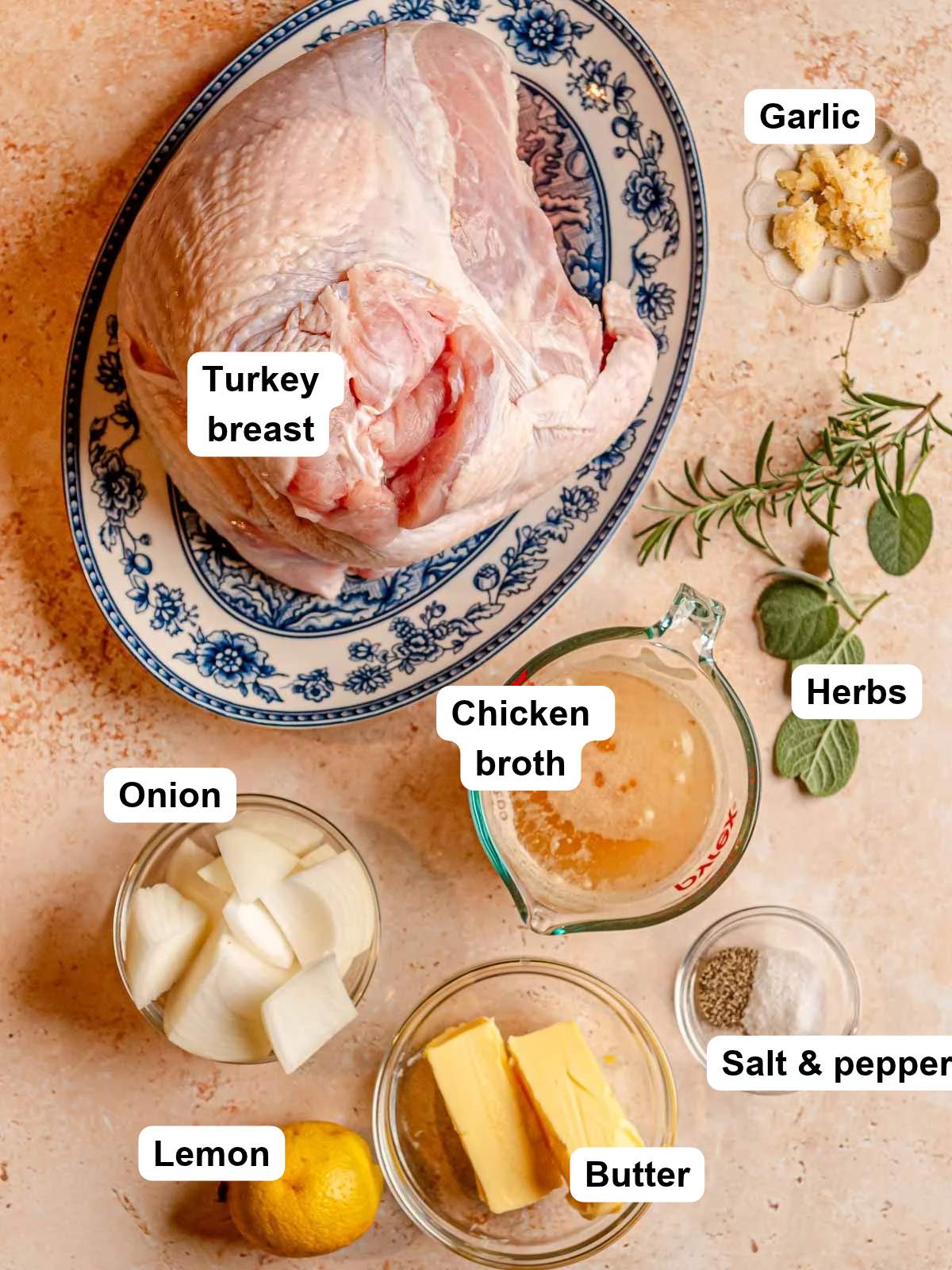
- Bone-in, skin-on turkey breast. The bone helps the meat cook more evenly and stay juicy, and the skin protects the breast while it roasts. A boneless turkey breast roast will work, but it cooks much faster, so start checking the temperature around the 1-hour mark. A partly frozen center means the outside overcooks before the middle catches up, so plan on 1 to 2 days in the refrigerator to thaw a 4 to 6-pound breast. Plan on 1 to 2 days in the refrigerator for a 4 to 6-pound breast.
- Unsalted butter. Unsalted butter lets you control the seasoning. It should be soft enough to spread like frosting but not melted. Melted butter slides right off the meat instead of staying put. If you only have salted butter, cut the kosher salt down to 1½ teaspoons.
- Fresh sage, rosemary, and thyme. This trio gives you that classic holiday turkey flavor. You can use dried herbs in a pinch at about one-third of the amount. The flavor will be a little less bright, but it will still taste great.
- Garlic. Grate or mince it very finely so it blends into the butter. Bigger pieces can scorch on the outside of the skin.
- Lemon zest. Just a teaspoon brightens all that rich butter without making the turkey taste lemony. You can skip it, but the butter will taste heavier without it.
- Kosher salt. I use 2 teaspoons of Diamond Crystal. Morton kosher salt is saltier by volume, so use about 1½ teaspoons if that's what you have.
- Onion and low-sodium broth. The onion wedges act as a natural roasting rack and add sweet, savory flavor to the drippings. The broth keeps the pan from scorching. I use low-sodium broth because the drippings concentrate as they cook, and regular broth can make your pan juices or gravy too salty. Chicken or turkey broth both work.
See the recipe card below for the remaining ingredients and quantities.
Instructions
Step 1
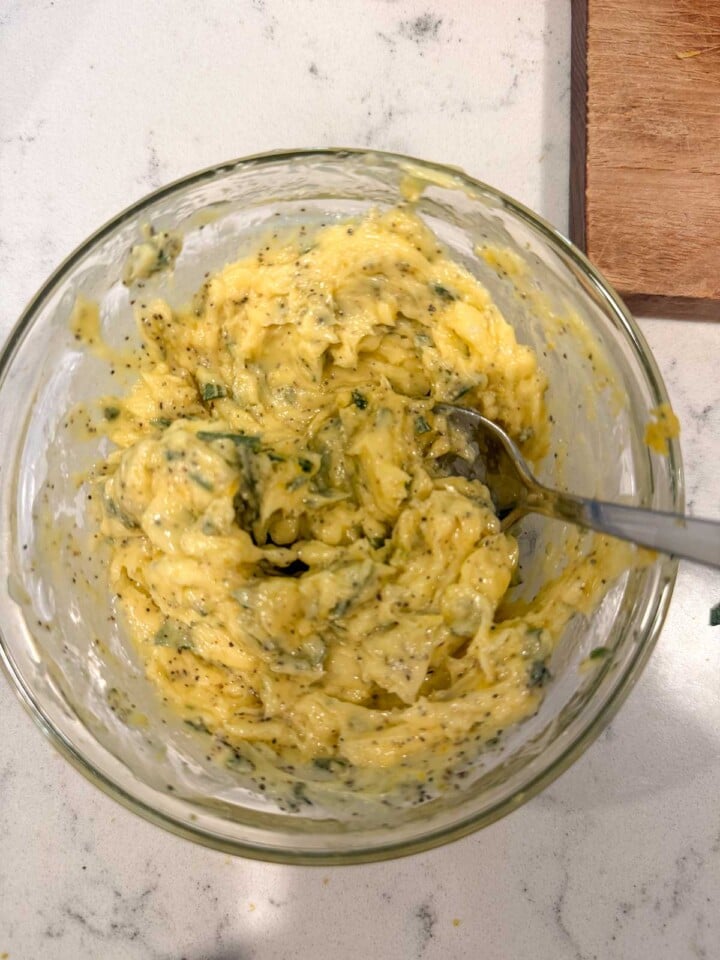
Preheat the oven to 325°F. Arrange the onion wedges in a small roasting pan and pour in the broth. Set a roasting rack over the onions if you have one. If not, the onions will hold the turkey up off the bottom of the pan. Mix the softened butter, garlic, sage, rosemary, thyme, lemon zest, salt, and pepper in a small bowl. The butter should look evenly flecked with green and feel smooth and spreadable.
Step 2
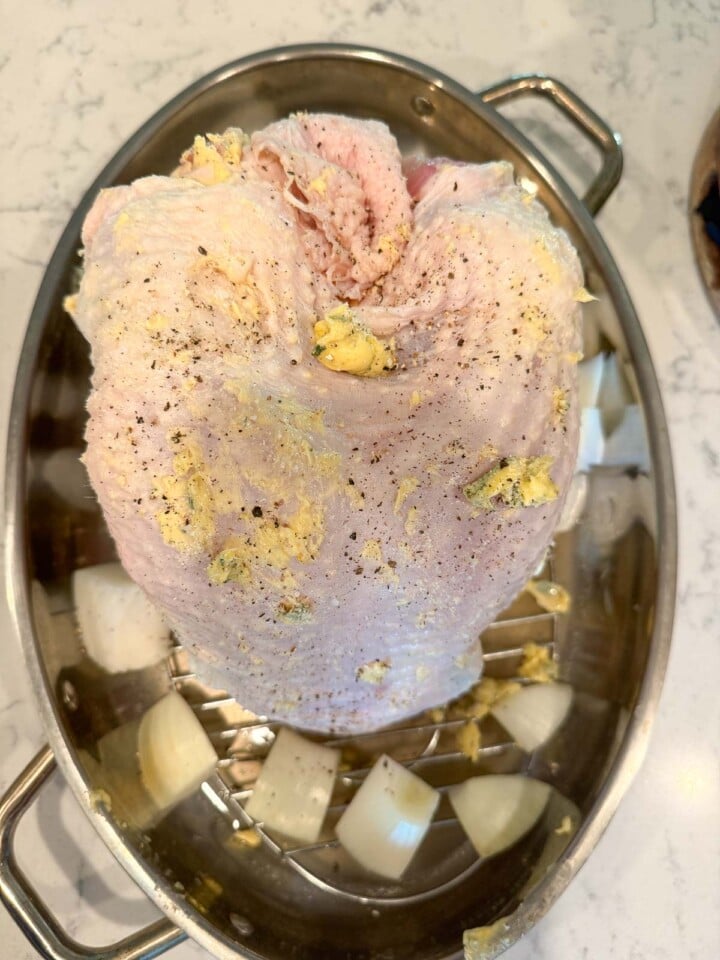
Pat the turkey breast thoroughly dry with paper towels. Gently loosen the skin with your fingers, keeping it attached around the edges. Spread about two-thirds of the butter under the skin directly over the meat, then press on the skin to smooth it out. Rub the remaining butter all over the outside.
Step 3
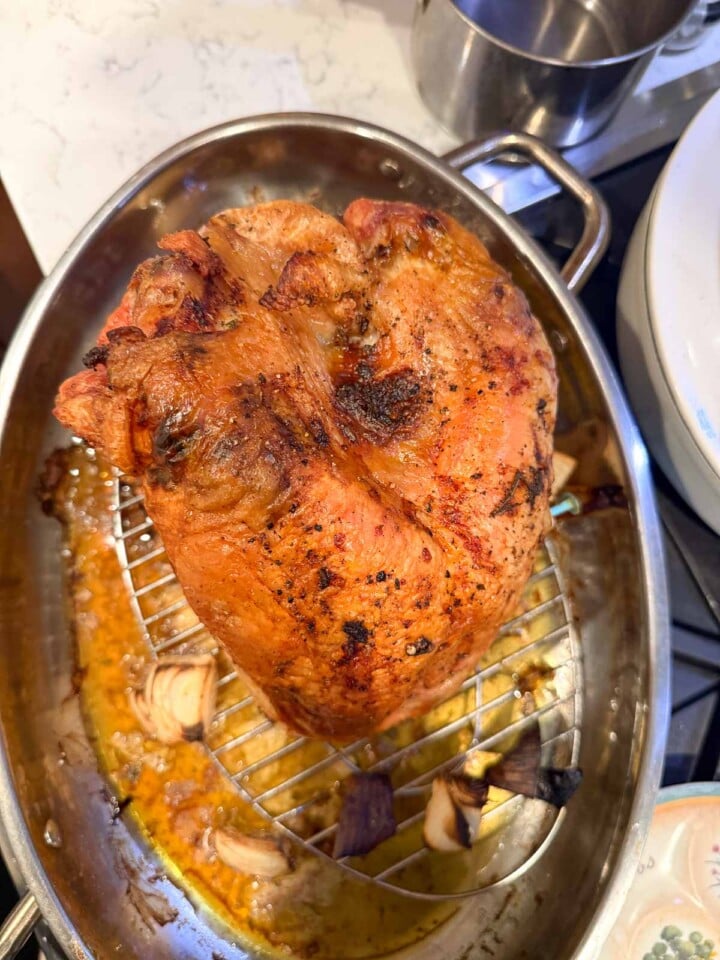
Place the turkey skin-side up on the rack or onion wedges. Roast uncovered for about 1½-2½ hours. Around the one-hour mark, the skin should be light golden, and the kitchen should smell like garlic and sage. If the skin turns deep brown before the turkey is done, loosely tent it with foil. Add a splash more broth if the pan starts to look dry or the drippings begin to darken. Start checking the temperature at 1½ hours. The turkey is done when an instant-read thermometer in the thickest part of the breast reads 165°F without touching the bone. The skin should be crisp and deep golden, and the juices should run clear.
Step 4
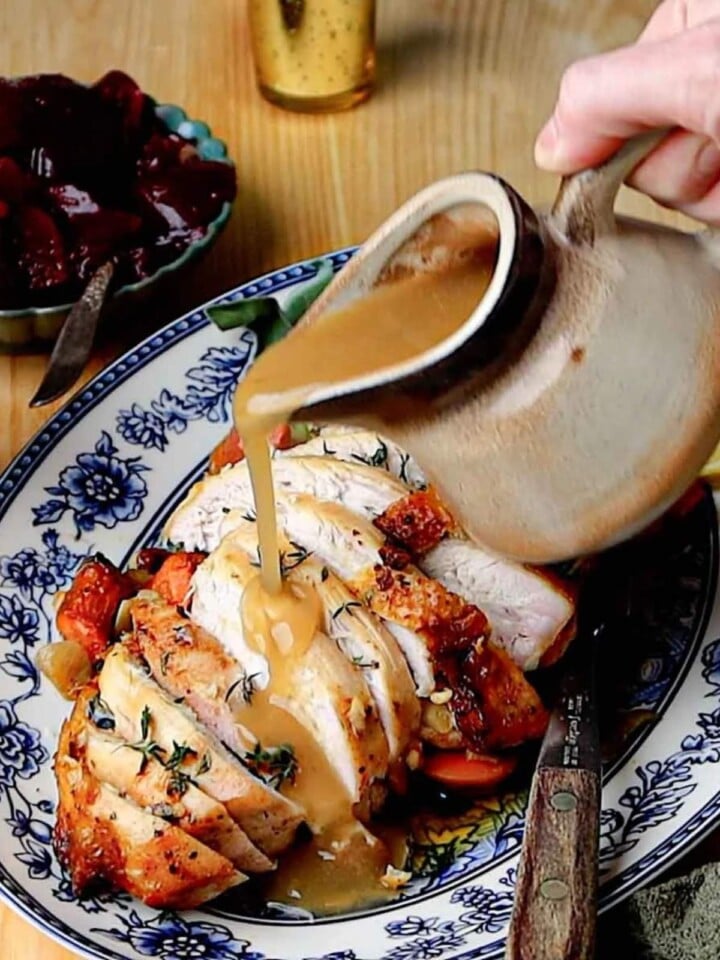
Move the turkey to a cutting board and loosely tent it with foil. Let it rest for 20 minutes. To carve, run your knife along the breastbone and down the rib cage to lift each side off in one piece. Then slice across the grain into ½-inch slices. Spoon the pan juices over the top or serve with gravy.
Sarah's Top Tips
- Trust your thermometer, not the timer. Turkey breasts vary a lot in size and shape, which is why the cook time is a full hour wide. Start checking at 1½ hours and pull the turkey as soon as the thickest part reads 165°F. Keep the probe away from the bone, because bone runs hotter and gives you a false reading. If you have a whole double breast, check both sides, since one is often thicker than the other. If one side finishes first, tent it with a piece of foil while the thicker side catches up.
- Get the skin really dry before the butter goes on. Any moisture left on the skin will steam instead of brown, and it also keeps the butter from sticking. Pat it dry with paper towels until it feels tacky, not slick. This one small step is the difference between pale, soft skin and golden, crackly skin.
- Keep an eye on the color of the skin. If the skin turns deep brown before the turkey is done, tent it loosely with foil. Keep it loose, because wrapping it tightly traps steam and softens the skin you worked to crisp. On the flip side, if the turkey is almost at temperature and the skin still looks pale, raise the oven to 400°F for the last 10 to 15 minutes and watch it closely.
- Save those drippings for gravy. The onions and broth make a flavorful base, so don't toss them. Strain the pan juices and skim off the fat. Cook 2 tablespoons of that fat with 2 tablespoons of flour in a saucepan for a minute, then whisk in about 2 cups of drippings and broth. Simmer until it thickens, about 5 minutes.
Serving Suggestions
The classic way to serve this turkey breast is just how you'd serve a whole holiday bird. Slice it onto a big platter, spoon the warm pan juices over the top, and set out cranberry sauce and a bowl of gravy. Because it only needs a regular roasting pan, you still have room in the oven for your sides. I like to slide a tray of vegetables in while the turkey rests and turn up the heat for those 20 minutes.
Creamy Yukon Gold mashed potatoes are a must for me, because they soak up every drop of the herby pan juices. For something green, maple bacon Brussels sprouts bring a sweet and smoky contrast to the sage and rosemary. And honey roasted carrots and parsnips add a pop of color to the table and roast at the same time as the Brussels sprouts.
Storage & Reheating
Fridge: Store leftover turkey in an airtight container in the refrigerator for up to 4 days. I like to slice it first and add a spoonful of pan juices or broth to keep it from drying out.
Freezer: Freeze sliced turkey in freezer bags with a splash of broth or pan juices for up to 3 months. Press out as much air as you can before sealing. Thaw overnight in the refrigerator. The texture will be slightly softer after freezing, but the broth helps it stay moist.
Reheat: For the best texture, reheat slices in a covered baking dish with a splash of broth at 325°F for about 15-20 minutes, until hot. You can also warm them in a covered skillet over medium-low heat or in the microwave in 30-second bursts. The skin won't stay crisp after reheating, but the meat will stay juicy.
Make ahead: Mix the herb butter up to 3 days ahead and keep it covered in the fridge. Let it soften before using. You can also butter the turkey the night before and refrigerate it uncovered. The skin dries out a bit overnight, which helps it roast up even crispier.
Leftovers make the best next-day sandwiches with a swipe of cranberry sauce and a handful of greens.
Did you make this recipe? Leave a ⭐️⭐️⭐️⭐️⭐️ rating and a comment below-I'd love to hear how it turned out! THANK YOU!
Juicy Roasted Turkey Breast with Garlic Herb Butter
Save this Recipe!
See the full post for extra tips and photos
Ingredients
- 1 bone-in, skin-on turkey breast, 4-6 pounds, fully thawed
- ½ cup unsalted butter, softened
- 4 garlic cloves, finely minced or grated
- 1 tablespoon fresh sage, finely chopped
- 2 teaspoons fresh rosemary, finely chopped
- 2 teaspoons fresh thyme leaves
- 1 teaspoon lemon zest
- 2 teaspoons kosher salt
- ½ teaspoon black pepper
- 1 large yellow onion, cut into thick wedges
- 1 cup low-sodium chicken or turkey broth, plus more as needed
Instructions
- Preheat the oven to 325°F. Arrange the onion wedges in a small roasting pan and pour in the broth. Set a roasting rack over the onions, if you have one.1 cup low-sodium chicken or turkey broth
- In a small bowl, mix the softened butter, garlic, sage, rosemary, thyme, lemon zest, salt, and pepper until combined.½ cup unsalted butter, 4 garlic cloves, 1 tablespoon fresh sage, 2 teaspoons fresh rosemary, 2 teaspoons fresh thyme leaves, 1 teaspoon lemon zest, 2 teaspoons kosher salt, ½ teaspoon black pepper
- Pat the turkey breast thoroughly dry with paper towels. Gently loosen the skin with your fingers, keeping it attached around the edges. Spread about two-thirds of the butter underneath the skin directly over the meat. Rub the remaining butter over the outside. Press on the outside of the skin with your palm to spread it evenly. Rub the remaining butter over the outside.1 bone-in
- Place the turkey breast skin-side up on the rack or onion wedges. Roast uncovered for approximately 1½-2½ hours, beginning to check the temperature after 1½ hours. If the skin browns before the turkey is cooked, loosely tent it with foil. Add more broth if the pan begins to dry out.1 large yellow onion
- Remove the turkey when an instant-read thermometer inserted into the thickest part of the breast, without touching bone, registers 165°F. Check both sides if using a whole double breast.
- Transfer the turkey to a cutting board and loosely tent with foil. Rest for 20 minutes. Remove the breast meat from the bone, then slice across the grain. Serve with the pan juices or gravy.
Sarah's Tips
- Pat the skin completely dry, because dry skin is what gets golden and crisp.
- Put two-thirds of the butter under the skin, since butter on the meat keeps the breast juicy.
- Make sure the turkey is fully thawed, or the outside will overcook before the center is done.
- Cook times vary by size, so use a thermometer and pull the turkey at 165°F.
- Keep the probe away from the bone and check both sides of a double breast.
- Tent with foil loosely if the skin browns early, because tight foil will steam the skin soft.
- Use low-sodium broth so the pan juices don't turn too salty as they reduce.
- Rest the turkey for 20 minutes before slicing so the juices stay in the meat.
- If using salted butter or Morton kosher salt, reduce the salt to 1½ teaspoons.
- If the skin is still pale near the end, raise the oven to 400°F for the last 10-15 minutes.
- No fresh herbs? Use 1 teaspoon dried sage, ½ teaspoon dried rosemary, and ½ teaspoon dried thyme, and crush the rosemary so it softens into the butter.
Comments
No Comments